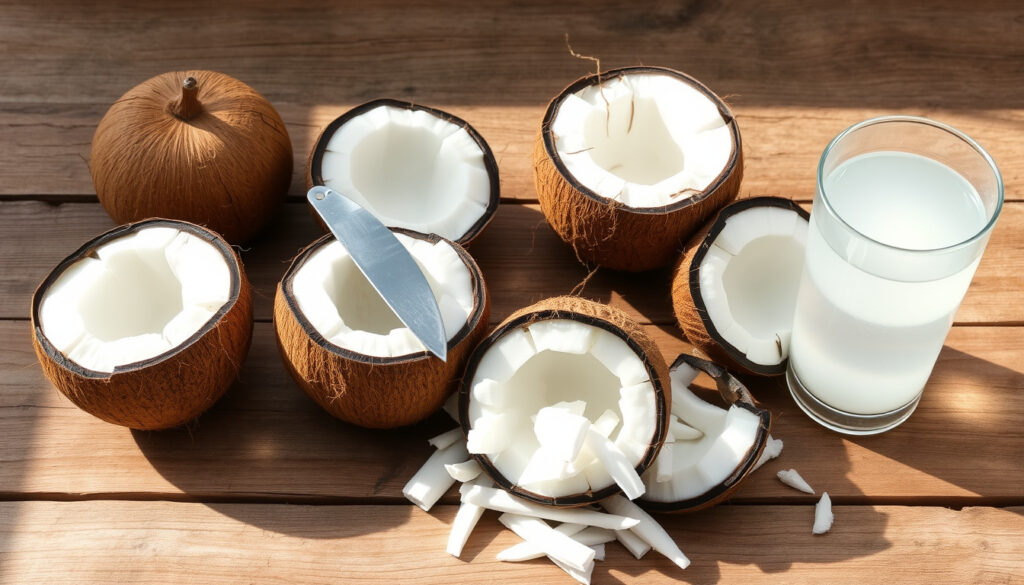
How to Open a Coconut – 4 Proven Methods for Water and Meat
Opening a coconut can seem like a job for a machete, but with the right technique anyone can do it safely at home. Whether you want the water, the flesh, or both, there are reliable methods that require no tools, only a knife, or even just a spoon. The key is knowing which approach suits the type of coconut you have and what you plan to do with it.
Coconuts come in two main forms: young green ones with a soft, cuttable shell, and mature brown ones with a hard, fibrous husk. Each demands a different strategy. No single technique works flawlessly every time, but the steps below are drawn from a range of tested sources.
How to Open a Coconut Without Tools
Before getting into specific techniques, here is an overview of the four primary ways to open a coconut. Each method varies in time, effort, and the tools required.
Tool-Free – Smash against a concrete edge or heavy rock. No tools needed. 2–5 minutes. Medium difficulty.
Knife & Hammer – Score and tap along the equator. 3–8 minutes. Medium to high difficulty.
Spoon – Wedge a spoon into a scored line (best for young coconuts). 2–4 minutes. Easy.
Oven – Bake at 190°C (375°F) until the shell cracks. 15–20 minutes. Easy but time‑consuming.
A few key insights can save time and prevent accidents:
- Coconut water is sterile inside the nut – safe to drink immediately after opening.
- Mature brown coconuts have hard shells; young green coconuts have soft, cuttable shells.
- The “bang method” (hitting against concrete) is the fastest tool‑free technique but risks splattering.
- Using a heavy knife (cleaver) is safer than a chef’s knife due to weight and control.
- Freezing a coconut for 30 minutes before cracking can create micro‑fractures for easier opening.
- The oven method works by expanding internal air, but can dry out the meat if overbaked.
- Always drain the coconut water before cracking if you plan to use it – it keeps the liquid clean.
| Attribute | Value |
|---|---|
| Average weight | 1–2 kg (2.2–4.4 lbs) |
| Coconut water volume | 200–350 ml per nut |
| Shell types | Young (green, soft) vs. Mature (brown, hard) |
| Meat thickness | 5–15 mm depending on maturity |
| Best method for water | Drill eye with screwdriver or knife tip |
| Best method for meat | Score and crack along equator, then use spoon or knife to pry out |
How to Open a Coconut with a Knife
Using a knife is one of the most common methods, preferably a cleaver or a heavy chef’s knife. The blunt edge of the blade is used to tap around the coconut’s equator until the shell splits. Sources such as Instructables describe tapping with significant force all around the circumference. Start by draining the water first (see the tip below), then place the coconut on a towel to keep it stable. Strike the shell along its fattest part – the equator – rotating the coconut after each tap. Within a minute or two a crack should appear.
Always use the blunt side of the knife or cleaver. The sharp edge can slip and cause injury. Keep the coconut steady on a towel or cutting board to prevent it from rolling. AlphaFoodie and other sources specifically warn against using the sharp edge for cracking.
How to Open a Coconut with a Spoon
A spoon is effective only for young coconuts or for coconuts that have already been scored or baked. After cracking the shell (or cutting off the top of a young coconut), slide a sturdy metal spoon between the shell and the flesh. Gently twist and pry to loosen the meat. For young coconuts, the flesh is soft and comes away easily. This method is not recommended for mature coconuts because the meat is too firmly attached.
Coconut Opener Tools
Specialized coconut openers exist – devices that pierce the shell with a corkscrew-like mechanism or a levered blade. They work best on young or pre‑weakened shells. For mature coconuts, a hammer and a blunt blade remain more reliable than most handheld openers. No commercial tool guarantees a clean split every time, and many are designed primarily for accessing the water rather than the meat.
How to Open a Coconut and Get the Meat Out
If your goal is to extract both the water and the flesh, the order of steps is important. Draining the water first prevents spillage and keeps the liquid clean. Then crack the shell using your chosen method. Once open, remove the meat by slipping a butter knife between the shell and the flesh. NutritionRefined recommends using a vegetable peeler to remove the brown skin if you want only the white meat. Once you have your fresh coconut meat, you can use it in various recipes. For a sweet treat, learn How to Make Custard – Step‑by‑Step Guide and Fixes.
Find the three eyes at the top of the coconut. Puncture the softest one with a clean nail, screwdriver, or skewer. Turn the coconut upside down over a glass or bowl to collect the liquid. Strain through a sieve or cheesecloth if any shell bits fall in. The Art of Manliness also recommends this sequence.
How to Open a Coconut to Drink
For drinking, you only need to access the water. Young coconuts can be opened by slicing off the top with a knife – the husk is thin and the shell underneath is soft. For mature coconuts, drain the water through the eyes as described above, then crack the shell to retrieve the liquid if it didn’t all come out. Drinking the water immediately is safe because the interior is sterile.
How to Open a Coconut Without Breaking It
Keeping the shell intact is difficult, especially with mature coconuts. The oven method offers the best chance: baking the drained coconut at 190°C (375°F) for 10–15 minutes causes the shell to crack on its own, often in a single line. The meat shrinks away from the shell, making it possible to pry out large pieces without shattering. However, no method guarantees a perfectly intact half; some breakage is normal.
Baking not only cracks the shell but also loosens the meat. The internal pressure from expanding air and steam creates the crack. Do not overbake – the meat can dry out and become tough. Instructables provides a step‑by‑step for this technique.
What Is the Step‑by‑Step Process to Open a Coconut?
The following step‑by‑step process covers the general workflow from selection to final extraction. Times are estimates and vary by method.
- Choose the coconut – Shake it to hear the water sloshing; that indicates freshness. A ripe coconut feels heavy for its size.
- Drain the water – Puncture the softest eye with a clean tool. Collect the water in a bowl. This takes about 1 minute.
- Prepare the shell – For tool‑free: find a hard edge. For knife: score the equator. For oven: preheat to 190°C (375°F). 2 minutes.
- Crack the shell – Tap firmly around the equator with a blunt blade, or bang against concrete, or bake for 10–15 minutes. 2–15 minutes.
- Split into halves – Once a crack appears, pull the halves apart. If necessary, give the shell another tap. 1 minute.
- Extract the meat – Slide a butter knife between shell and flesh. For stubborn meat, bake again briefly or tap the shell to loosen. 2–5 minutes.
- Peel the brown skin – (Optional) Use a vegetable peeler to remove the inner skin for white meat. 1–2 minutes.
Which Methods Are Reliable and Which Are Risky?
| Established information | Information that remains unclear |
|---|---|
| Knife & hammer along the equator consistently splits the shell cleanly. | The spoon method works only on young or pre‑weakened coconuts; its success on mature nuts is low. |
| The oven method cracks the shell via pressure, but the meat can overcook if left too long. | Claims of opening a coconut “in 3 seconds” often require precise positioning; success drops with irregular shells. |
| Tool‑free banging works for most mature coconuts but may shatter the shell unevenly. | No method guarantees a perfectly intact shell; “without breaking” is very difficult for mature coconuts. |
How Do the Different Methods Compare?
Each method has strengths and weaknesses. The tool‑free bang method is the fastest but risks splashing water and uneven breaks. The knife‑and‑hammer method is more controlled and works well for both water and meat extraction, but requires a heavy blade and some practice. The spoon method is limited to soft‑shelled young coconuts. The oven method is the safest and most predictable for obtaining large pieces of meat, though it takes longer.
The equator line is the weakest point of the coconut shell. This is where the two halves of the fruit were joined, and it naturally splits there under pressure. Water drainage should always be performed before cracking if you want to keep the liquid; cracking first often results in spilled water and shell fragments floating in it. Common mistakes include using the sharp edge of a knife (which can slip), holding the coconut in your hand while striking (risk of hitting fingers), and overbaking the coconut (dries the meat).
What Do the Sources Say About Opening a Coconut?
Several instructional guides offer practical, hands‑on advice. The quotes below reflect the most common recommendations.
“Using the back of a cleaver, or a sturdy knife, tap with significant force all away around the circumference of the coconut.”
— Instructables
“I’ll be outlining four methods on how to crack open a coconut, including the Hammer method, Bang method, Oven method, Saw method.”
— AlphaFoodie
“Use a screwdriver to push through the softest of the face dots. Drain the water into a cup.”
What Should You Do After Opening a Coconut?
Once the coconut is open, the water can be drunk immediately or refrigerated for 1–2 days. The meat can be removed with a butter knife, then peeled if desired. Fresh coconut meat works well in smoothies, curries, raw snacks, and desserts. For longer storage, keep the meat in water in the fridge for up to a week, or freeze it for up to six months. If you are looking for recipe ideas, you could also try Sweet and Sour Chicken – Easy Cantonese and Family Recipes.
Frequently Asked Questions
Can you open a coconut with a screwdriver?
Yes, a screwdriver is commonly used to puncture the soft eye of the coconut to drain the water. It is not used for cracking the shell itself.
How long does coconut water last after opening?
Fresh coconut water should be refrigerated and consumed within 1–2 days. It can spoil quickly if left at room temperature.
Is the brown skin on coconut meat edible?
Yes, the brown skin is edible. Some people prefer to peel it off with a vegetable peeler for a cleaner white appearance.
What is the safest method for beginners?
The oven method is safest because it requires no striking or sharp blades. It takes longer but reduces the risk of injury.
Can you open a young coconut without any tools?
Young coconuts have a softer husk that can be cut with a knife, but opening them entirely without tools is difficult. A knife or cleaver is usually needed.
Why does my coconut water taste sour?
Sour or off‑flavored coconut water indicates spoilage. Fresh coconut water should taste mildly sweet and nutty. Discard if it smells fermented.
How do you know if a coconut is mature?
Mature coconuts have a brown, hard shell and make a sloshing sound when shaken. Young coconuts are green or white, with a softer, fibrous husk.
More related posts
 Mark Twain – Biography, Famous Works, and Controversy
 Tracy Chapman – Life, Career and Where She Is Now
 Jamie Borthwick – Axed from EastEnders After 19 Years
 Tom Ackerley – Biography, Net Worth, and Marriage to Margot Robbie
 Richard Nixon – Life, Presidency and Watergate Legacy
 Bruce Springsteen Tour 2025 – Dates Tickets and What’s Next
 Lee Majors – Biography, Net Worth and Iconic TV Career
 Julian Ovenden – Biography, Career and 2025 Update