How to Make Custard – Step-by-Step Guide and Fixes
Custard is a foundational dessert preparation that has graced tables for centuries, from the classic French crème anglaise to the comforting baked custards found in households worldwide. Understanding how to make custard opens doors to countless desserts, from pie fillings and cake layers to standalone treats enjoyed warm or chilled. The technique requires attention to temperature control and proper thickening ratios, but remains accessible to home cooks willing to learn a few essential principles.
Whether you prefer the traditional egg-based method or need an eggless alternative, custard preparation follows predictable patterns. The difference between success and failure often comes down to understanding how thickening agents work and recognizing the signs that indicate when the mixture is properly set. This guide covers multiple preparation methods, troubleshooting techniques, and practical storage advice to help anyone master this versatile dessert. For related dessert recipes, explore our collection of classic preparations.
What Ingredients Do You Need to Make Custard?
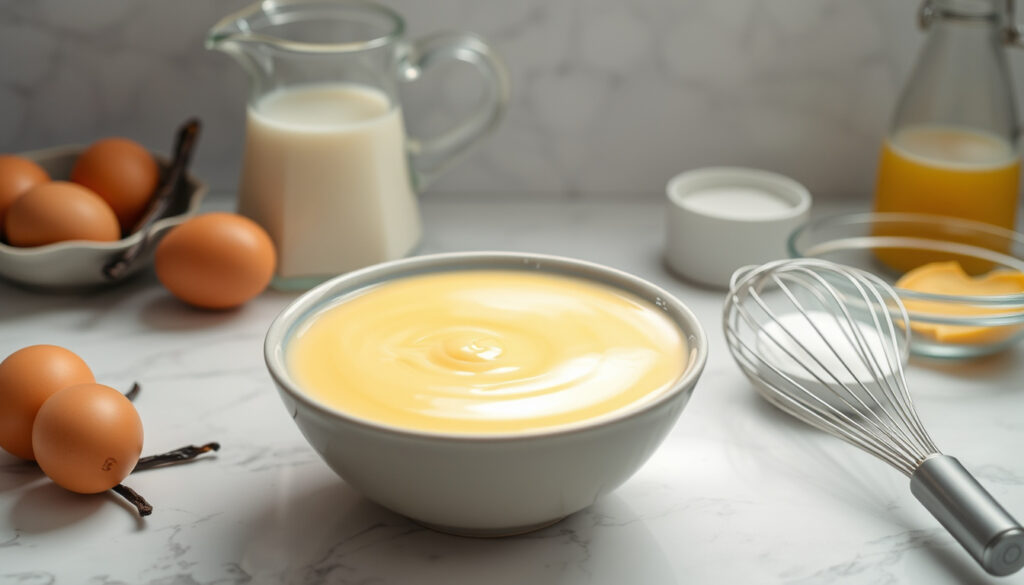
Traditional custard relies on just a handful of ingredients that work together through careful heat application. Milk or cream forms the liquid base, while eggs provide structure through coagulation. Sugar sweetens the mixture, and vanilla or other flavorings add dimension. The key to success lies in the ratio between these components and the precision used during cooking.
Stovetop • Microwave • Baked • Eggless
10-15 min • 20 min • 45 min • 10-15 min
Easy to Medium based on method chosen
Sauces, Quick preparations, Desserts, Allergies
Key Tips for Perfect Custard Every Time
- Stir constantly during stovetop preparation to prevent scorching and ensure even thickening
- Never exceed 85°C (185°F) when cooking egg-based custards to avoid curdling
- Use a cornstarch slurry for eggless versions, mixing the starch with cold liquid first
- Cool custard quickly after cooking, then refrigerate promptly for food safety
- Add fruits or mix-ins only after the custard has cooled to room temperature
- Strain through a fine sieve to achieve a silky, smooth texture
| Fact | Detail |
|---|---|
| Servings | 4-6 depending on recipe |
| Prep Time | 5-10 minutes |
| Cook Time | 10-15 minutes (stovetop) |
| Calories per Serving | Approximately 176-200 kcal |
| Key Thickener | Eggs or cornstarch |
| Shelf Life | 3-5 days refrigerated |
How to Make Custard: Step-by-Step Stovetop Guide
The stovetop method remains the most versatile approach for making custard at home. This technique works for both traditional egg-based custards and eggless variations using custard powder or cornstarch. The process demands constant attention, but the results justify the effort.
Preparing the Base
Begin by heating the milk in a heavy-bottomed saucepan over medium heat until it reaches a frothy state. According to Microwave Fruit Custard recipes, bringing milk to this point ensures proper incorporation of additional ingredients. Once frothy, reduce the heat to low to prevent scorching during the next phase.
For eggless versions, measure approximately one cup of warm milk separately and mix it with custard powder or a cornstarch slurry. The slurry consists of one teaspoon of cornstarch combined with one tablespoon of cold milk per cup of finished custard. Whisking these ingredients together before adding them to the hot milk prevents lumps from forming.
The Cooking Process
Whisk the prepared slurry into the hot milk along with sugar and any desired flavorings such as vanilla extract or saffron strands. Continue cooking on low heat while stirring continuously. The mixture will begin to thicken within two to five minutes. Patience proves essential during this phase, as rushing leads to uneven texture or scorching.
For traditional egg-based custards, temper the eggs by slowly drizzling the hot milk mixture into beaten eggs while whisking constantly. Return the tempered mixture to the pan and heat gently, stirring until the custard coats the back of a spoon. The How to Fix Common Issues When Making Custard guide emphasizes maintaining temperatures below 85°C (185°F) throughout this process.
Use a candy thermometer when starting out. Egg-based custards curdle when temperatures exceed 85°C (185°F), resulting in a grainy, separated texture that cannot be fixed. Low and slow is the key principle.
How to Thicken Custard and Fix Common Problems
Even experienced cooks encounter issues when making custard. Understanding the root causes of common problems and their remedies transforms potential failures into salvageable results. Most texture issues stem from temperature control, ingredient ratios, or insufficient mixing technique.
Curdling and Lumps
Curdling occurs when custard overheats above 85°C or encounters acidic ingredients that cause the proteins to clump. When this happens, the kitchen rescue techniques recommend several approaches. First, remove the pan from heat immediately and allow it to cool slightly. Then, whisk in a quarter cup of cold milk gradually before returning to low heat for three to five minutes.
A cornstarch slurry offers another rescue option for overheated custards. Mix one teaspoon of cornstarch with one tablespoon of cold water or milk, then stir this into the warm (not hot) custard. Cook for two minutes while stirring. This method creates a denser texture but successfully restores smoothness to the mixture.
Runny or Thin Texture
Custard that fails to thicken properly usually results from incorrect ingredient ratios or insufficient cooking time. Adding a thickening slurry often resolves this issue. Beyond cornstarch, home cooks can use flour (two tablespoons mixed with four tablespoons of cold water per cup) or tapioca (one teaspoon plus one tablespoon of water per cup) as alternatives.
Cornstarch creates the smoothest texture and is nearly flavorless. Flour adds a slight graininess but works reliably. Tapioca produces a glossier finish but may leave tiny gel particles. Choose based on your desired final texture.
Prevention Strategies
Prevention proves far easier than remediation when working with custard. Stirring constantly with a wooden spoon or silicone spatula ensures even heat distribution. Using a heavy-bottomed pan helps regulate temperature more precisely. Finally, working with lower heat for longer periods reduces the risk of sudden temperature spikes that cause curdling.
| Issue | Cause | Fix | Time |
|---|---|---|---|
| Curdled/Lumpy | Overheat above 85°C | Cornstarch slurry or tempering restart | 2-7 minutes |
| Runny/Thin | Wrong ratios, undercooking | Cornstarch/flour/tapioca slurry | 2-5 minutes |
| Not Thickening | Lumps in powder, insufficient heat | Whisk thoroughly, extend cooking time | Varies |
Custard Variations: Eggless, Baked, and Powder Recipes
The versatility of custard extends far beyond the basic stovetop recipe. Eggless versions accommodate those with allergies or dietary restrictions, while baked custards develop a different texture entirely. Commercial custard powder offers convenience, though homemade alternatives work equally well.
Microwave Method
The microwave provides a surprisingly effective shortcut for making eggless custard. According to Microwave Fruit Custard instructions, heat milk for four to five minutes, stirring every two minutes to prevent overflow. Then whisk in custard powder, sugar, and flavorings before microwaving for an additional 1.5 to 2 minutes. The total time from start to finished product amounts to approximately 20 minutes of cooking plus 40 minutes of chilling, yielding six servings at roughly 176 calories each.
Baked Custard Technique
Baking transforms custard into a firmer, more set dessert suitable for pies and tarts. The technique involves placing a water bath (bain-marie) in the oven, with custards set in containers within the larger pan of hot water. Temperatures between 150-160°C regulate gently, allowing the mixture to set without direct high heat that would cause curdling.
Using Custard Powder
Custard powder consists of cornstarch base blended with vanilla flavoring and sometimes food coloring. It provides consistent results without the complexity of working with eggs. Simply mix the powder with cold milk to form a smooth paste, then whisk this into heated milk. The mixture thickens as it cools, typically reaching optimal consistency after ten minutes at room temperature followed by refrigeration.
Egg-based custards containing raw or undercooked eggs carry salmonella risk. Always use pasteurized eggs when serving to vulnerable populations including children, elderly individuals, or those with compromised immune systems. Refrigerate promptly and consume within three days.
Vegan Alternatives
Plant-based milks including coconut and almond varieties work successfully in eggless custard recipes. Replace dairy milk with your preferred alternative and proceed with cornstarch or custard powder as the thickening agent. The resulting texture closely resembles traditional custard, though flavor profiles differ based on the milk choice. For more vegan baking alternatives, browse our dedicated section.
The Step-by-Step Timeline
- Heat milk (2-3 min): Warm milk in heavy-bottomed pan until frothy over medium heat
- Prepare slurry (2 min): Mix cornstarch or custard powder with cold liquid to form smooth paste
- Combine ingredients (1 min): Whisk slurry, sugar, and flavorings into hot milk
- Cook and thicken (5-7 min): Maintain low heat, stir constantly until desired consistency
- Strain (1 min): Pass through fine sieve for silky texture
- Cool and set (10-40 min): Allow to reach room temperature, then refrigerate
- Serve (varies): Enjoy warm, at room temperature, or chilled
Understanding Custard vs. Pudding
Established Information
- Traditional custard uses eggs as the primary thickener through protein coagulation
- Pudding relies on starch thickeners like cornstarch or flour without eggs
- Custard sets smoothly when baked or cooked gently on stovetop
- Eggless “custard” made with custard powder actually produces a pudding-like texture
- Both require refrigeration for food safety due to dairy and egg content
Information Requiring Clarification
- Regional naming conventions vary significantly between countries
- Some baked goods called “custard” use starch rather than eggs
- Commercially produced custard powders contain varying ingredients
- Exact shelf life depends heavily on specific recipe and storage conditions
The Science Behind Custard
Custard represents one of the oldest culinary applications of protein coagulation and starch gelatinization. When eggs heat beyond 60°C, their proteins begin to unfold and recombine into a gel structure that traps liquid, creating the characteristic thick texture. Cornstarch operates differently, absorbing liquid and expanding to create a gel network without requiring eggs.
Temperature management proves critical because eggs coagulate gradually. Between 60°C and 70°C, custards remain pourable. Above 85°C, proteins tighten excessively and squeeze out water, causing the mixture to curdle and become grainy. This narrow temperature window explains why custard-making demands attention and why double-boiler or water-bath methods prove so valuable.
Sugar affects the process by raising the coagulation temperature, meaning custards with higher sugar content can tolerate slightly higher heat before curdling. This property allows for more forgiving preparation when following recipes with substantial sugar quantities. The fat content of the milk or cream also influences texture, with higher fat contents producing richer, creamier results.
Expert Sources and Practical Guidance
“Stirring constantly while maintaining low heat remains the foundation of successful custard preparation. Even momentary inattention can result in scorching or uneven thickening that ruins the texture.”
— Kitchen technique guides on custard preparation
“Food safety guidelines from agricultural departments consistently recommend using pasteurized eggs when preparing custards, particularly when serving to vulnerable populations or when the custard will not be cooked to temperatures sufficient for pasteurization.”
— Food safety authorities on egg handling
Summary and Practical Next Steps
Making custard successfully requires understanding the interplay between ingredients, temperature, and technique. Whether choosing traditional egg-based methods or opting for eggless alternatives using custard powder or cornstarch, the principles remain consistent: gentle heat, constant stirring, and proper ratios produce reliable results. Problems like curdling and runniness can usually be salvaged with quick intervention, though prevention through careful attention proves more effective than reactive measures.
For those seeking quick preparations, the microwave method offers remarkable convenience without sacrificing quality. Explore Microwave Fruit Custard for a fast route to this classic dessert. Similarly, familiarizing yourself with How to Fix Common Issues When Making Custard provides valuable insurance against common problems.
Frequently Asked Questions
What is the difference between custard and pudding?
Custard uses eggs for thickening through protein coagulation, while pudding uses starch thickeners like cornstarch or flour. This distinction affects texture, with custard being more delicate and prone to curdling, while pudding is generally more stable.
How do I fix lumpy custard?
Remove from heat immediately and allow to cool slightly. Add a cornstarch slurry (1 tsp cornstarch + 1 tbsp cold liquid per cup) and cook for 2 minutes while stirring. Alternatively, strain through a fine sieve and whisk vigorously while reheating gently.
Can you make custard in the microwave?
Yes, especially for eggless versions. Microwave milk for 4-5 minutes, stir in custard powder and sugar, then microwave for 1.5-2 additional minutes. Total time including cooling is approximately 20 minutes cooking plus 40 minutes chilling.
How long does homemade custard last?
Homemade custard keeps for 3-5 days when refrigerated in an airtight container. The exact duration depends on ingredients used and storage conditions. Discard any custard showing signs of spoilage including off smells or discoloration.
What causes custard to curdle?
Custard curdles when heated above 85°C (185°F), when temperatures fluctuate erratically, or when acidic ingredients are added. Overmixing or using old eggs can also contribute to texture problems.
Can I make custard without eggs?
Absolutely. Eggless custard uses cornstarch slurry or commercial custard powder mixed into heated milk. The resulting texture resembles pudding rather than traditional custard but works well for fillings, sauces, and standalone desserts.
Is homemade custard safe to eat?
When prepared properly and refrigerated promptly, homemade custard is safe for most people. Those using raw eggs should use pasteurized eggs. Vulnerable populations including young children, elderly individuals, and those with weakened immune systems should consume only fully cooked custards.
Why did my custard not thicken?
Insufficient thickening usually results from incorrect ratios (not enough thickener), inadequate cooking time, or lumpy powder that failed to dissolve properly. Whisk thoroughly when adding thickeners and extend cooking time if needed.
More related posts
 William Conqueror – The Norman King’s Biography and Legacy
 Give Me Cosmetics Discount Code – Verified Promo Codes & Deals
 DWP Bank Account Checks 2026 – What You Need to Know
 How to Get Rid of a Sinus Infection in 24 Hours – What Really Works
 Michael Myers – Complete Guide to Mask, Actors and Movies
 Clive Owen – Career Highlights, Net Worth, and Family
 Catherine Parr – The Wife Who Survived Henry VIII