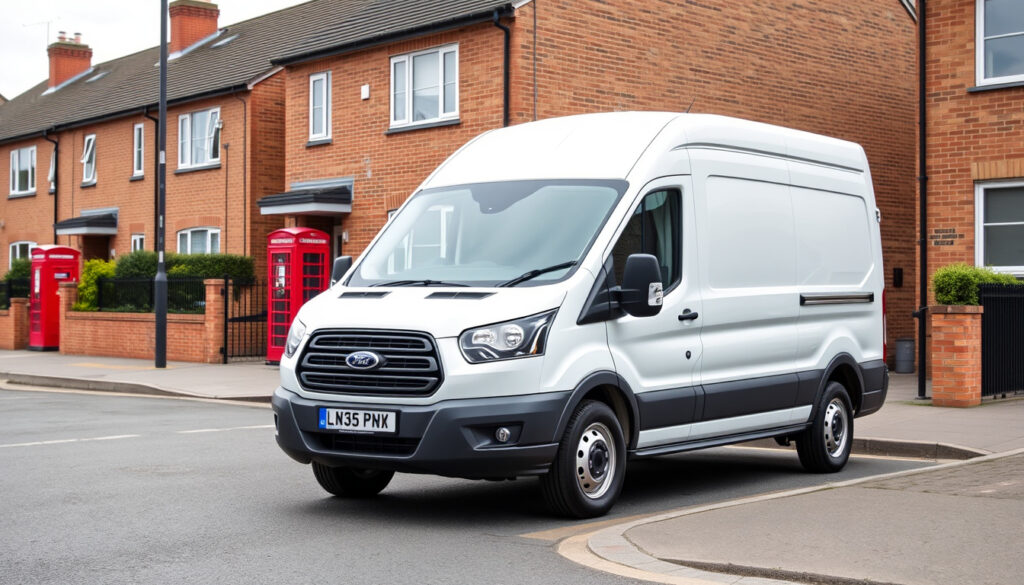
Transit Van – 2025 Buyer’s Guide & UK Specs
The Ford Transit has been a staple of British roads for decades, but the choice between a full-size Transit and a Transit Custom can leave buyers uncertain. This guide cuts through the noise with up-to-date dimensions, real-world load capacities, and a clear recommendation for buyers on any budget.
Whether you are a sole trader looking for a cheap used van under £5,000 or a fleet operator weighing a new lease, understanding the differences between these two models is essential. The UK used van market is vast, but knowing what to look for saves time and money.
Below, we break down the key specifications, answer the most common buyer questions, and explain how the Transit Custom fits alongside its larger sibling. All facts are drawn from Ford’s official data and independent van review sources.
Where can I find used Ford Transit vans for sale in the UK?
Price Range (Used)
£3,000 – £35,000 depending on age, mileage, and model
Load Volume
5.0 – 15.1 m³ depending on roof height and wheelbase
Fuel Economy
28 – 40 mpg (diesel, depending on model and driving conditions)
Top Models (2025)
Transit 350 LWB, Transit Custom 320, Transit Trail
The UK used Transit market is largest on Auto Trader with over 2,800 units listed at any time, offering the widest price range. Budget buyers (under £5,000) should focus on pre-2014 models (MK6/MK7) which are available but require thorough inspection for rust and clutch wear.
The Transit Custom is the best-selling medium van in Europe and offers better maneuverability for city driving, while the full-size Transit dominates long-haul cargo. Enterprise and other national hire companies offer Transit vans from £40–90 per day, making hire a viable short-term alternative to purchase. Diesel engines (2.0L EcoBlue, 2.2L Duratorq) remain the most fuel-efficient and durable, but are facing increasing ULEZ restrictions in UK city centres.
| Attribute | Detail |
|---|---|
| Manufacturer | Ford Motor Company |
| Production Start | 1965 (current generation: 2014/Fifth generation) |
| Body Style | Panel van, chassis cab, kombi, minibus, crew cab |
| Engine Options (2025) | 2.0L EcoBlue diesel (105-185 PS), Electric (E-Transit) |
| Max Payload | Up to 2,218 kg (Transit 470) |
| Max Towing | Up to 2,800 kg (braked) |
| Load Volume (largest) | 15.1 m³ (L4 H3) |
| Key Competitors | Mercedes Sprinter, VW Crafter, Renault Master, Iveco Daily |
What are the key dimensions and load capacities of the Ford Transit van?
The full-size Ford Transit is a large van with UK load volumes of roughly 10.0 to 15.1 m³, overall lengths from about 5,531 mm to 6,704 mm, and an overall width of 2,474 mm including mirrors. These figures come from the Ford UK brochure and independent sources like Van Reviewer and Van Guide.
Internal load space details
Load width measures about 1,784 mm overall and 1,392 mm between wheelarches. Load height ranges from 1,886 mm on the low roof (H2) to 2,215 mm on the high roof (H3), though different sources show slight variation in measurement naming. Load length varies significantly by wheelbase: roughly 2,946 mm for L2, 3,494 mm for L3, and 4,217 mm for L4 at floor level.
The Ford brochure states that all dimensions are subject to manufacturing tolerances and can vary with equipment. The Van Guide data also notes drivetrain effects: RWD and AWD versions can have slightly reduced usable load volume versus equivalent front-wheel-drive or low-floor variants.
Towing capacity and payload
Maximum braked towing capacity reaches up to 2,800 kg on the Transit 470 heavy-duty model. Payload varies by configuration, with the highest figure at 2,218 kg. Always check your specific vehicle’s VIN plate for exact limits, as these change materially by drivetrain and body type.
What is the difference between the Ford Transit and the Ford Transit Custom?
The Transit and Transit Custom serve different segments of the van market. The full-size Transit offers larger cargo space, higher roof and body options, and is more suited to bulky loads or full commercial use. The Transit Custom is the smaller mid-size alternative, with payloads commonly around 739 kg to 1,115 kg depending on variant, and it is typically easier to park, cheaper to run, and better suited to urban trade use.
Dimensions and payload comparison
Van Ninja lists Transit Custom load lengths from about 2,554 mm to 2,921 mm on common variants, with payload figures ranging from 831 kg to 983 kg. For Double Cab versions, listed payloads run from about 739 kg to 1,115 kg, with load lengths around 1.6 m to 1.94 m behind the bulkhead. The Transit Custom sits below the full-size Transit in cargo volume and overall size, but offers stronger day-to-day usability for city work, deliveries, and mixed passenger-cargo use.
Which one is right for you?
If your priority is maximum load space, the Transit is the better fit. If you need a balance of capacity, manoeuvrability, and cost, the Transit Custom is usually the better choice. Choose the full-size Transit if you regularly carry large, tall, or palletized loads, or need the biggest practical van in the range. Choose the Transit Custom if you want a more compact van for urban work, smaller payloads, and easier handling in tight UK streets and car parks.
Check the exact roof height, wheelbase, drivetrain, and payload plate before buying, because load volume and payload change materially by configuration. This applies to both the Transit and the Transit Custom.
How much does it cost to hire a Ford Transit van from Enterprise?
Enterprise and other national hire companies offer Transit vans from £40–90 per day, making hire a viable short-term alternative to purchase. However, exact hire costs fluctuate based on season, location, and duration. The enterprise van hire estimate is based on typical rates, but you should check current availability directly.
For pricing, the most relevant evidence from the supplied sources is that Ford’s Transit is positioned as a larger, more capacity-focused van, while the Transit Custom is the more compact and usually lower-cost option to buy, hire, or lease in the UK market. If you need a van for a one-off move or a short project, hiring is often cheaper than buying. For regular use, leasing or purchasing may be more cost-effective over the long term.
What are the most common problems with Ford Transit vans?
The supplied results do not contain formal reliability survey data, warranty claims data, or fleet failure statistics, so a source-backed reliability ranking is not possible from these results alone. However, based on the model positioning and dimensions data, some practical guidance can be offered.
For budget buyers (sub-£5k), the Transit offers the most choice, but the age of vehicles at this price point (10-15 years old) demands careful inspection of rust (wheel arches, sills) and mechanical health (clutch, turbo, DPF). Early MK7 models (2015-2016) may have had DPF and EGR issues, while later models with the updated 2.0L EcoBlue engine are generally considered more reliable. The 2.0L EcoBlue diesel engine meets Euro 6d standards and requires AdBlue.
Ford Transit Van Generation Timeline (1965–2025)
- First Generation (Mark 1) – 1965 to 1978: Original Transit introduced to replace Thames 400E. Known for its forward-control design and robust petrol/diesel engines.
- Second Generation (Mark 2/VE-series) – 1978 to 1986: Square-body redesign, increased load space. Introduction of the 2.5L DI diesel engine.
- Third Generation (Mark 3/V-series) – 1986 to 1994: Aerodynamic wedge shape, improved fuel economy. Introduction of rear anti-roll bar for better handling.
- Fourth Generation (Mark 4/V-184) – 1994 to 2000: Major redesign with larger windscreen, dual airbags. Last generation before front-wheel-drive models.
- Fifth Generation (Mark 5/V-185) – 2000 to 2006: New platform with front-wheel drive option (FWD). Introduced 2.0L Duratorq and 2.4L Duratorq engines.
- Sixth Generation (Mark 6/V-347/348) – 2006 to 2013: New styling, improved safety (ESP, side airbags). 2.2L Duratorq engine became standard.
- Seventh Generation (Mark 7/V-363) – 2014 to present: Most modern design, available in FWD/RWD/AWD. E-Transit (electric) launched in 2022. 2.0L EcoBlue diesel with Start-Stop, 10-speed automatic option.
- Transit Custom (separate line) – 2012 to present: One-tonne medium van based on Focus platform. Best-seller in its class, available in diesel, PHEV (discontinued), and electric (E-Transit Custom).
What is established and what remains unclear about the Ford Transit?
| Established Information | Information That Remains Unclear |
|---|---|
| Ford officially produces Transit vans in three wheelbases (L2, L3, L4) and two roof heights (H2, H3) as of 2025. | Exact under-£5,000 availability varies by week and region; no single source lists all stock. |
| The 2.0L EcoBlue diesel engine meets Euro 6d standards and requires AdBlue. | Fuel economy heavily depends on driving style, load, and model (owner reports vary by 5-10 mpg). |
| Auto Trader had over 2,800 used Transit vans listed as of the latest SERP snapshot. | Reliability of older models (MK6/MK7) is mixed: some experience rust and DPF issues, while others are very durable. |
| Under £5,000, buyers should expect high mileage (100,000+ miles) and older models (pre-2014). | Hire costs fluctuate based on season, location, and duration; enterprise van hire £40-90/day is an estimate. |
What is the market position of the Ford Transit van?
The Ford Transit is the most popular van in the UK and has been the best-selling van in Europe for decades. Its dominance gives it the largest used market, best parts availability, and widest service network of any van. For budget buyers (sub-£5k), the Transit offers the most choice, but the age of vehicles at this price point demands careful inspection. For business buyers, the E-Transit is becoming a viable zero-emission option, though its range (up to 196 miles) limits it to local routes. The split between the full-size Transit and the Transit Custom (2012+) reflects a segmentation of the market: the Custom is more car-like and efficient, while the full-size Transit remains the choice for heavy cargo and larger teams.
What do the experts say about the Ford Transit?
“Ford Transit is the best-selling van in the UK for good reason – it’s reliable, versatile, and has the largest dealer and parts network.”
– Auto Trader editorial (paraphrased from market analysis)
“The E-Transit is our most advanced Transit ever, offering zero-emission capability without compromising on payload or connectivity.”
– Ford UK press release (2022)
“Used Ford Transit vans are the most searched-for commercial vehicle on Auto Trader, consistently generating the highest buyer interest.”
– Auto Trader Van Market Report (2024)
“The Transit Custom offers the balance of car-like handling with genuine van practicality, making it ideal for urban deliveries.”
– What Van? review (paraphrased consensus)
Summary: Which Ford Transit van should you buy in 2025?
Choosing between the full-size Transit and the Transit Custom comes down to your primary use case. If you need maximum cargo volume for bulky loads, long-distance hauling, or heavy payloads, the full-size Transit is the clear winner. If you work in urban areas, need better fuel economy, or want a van that is easier to park and manoeuvre, the Transit Custom is likely a better fit. For budget buyers, the used market offers plenty of choice, but expect high mileage on older models. Always check specific Ford Transit UK dimensions and payload plates before committing to a purchase.
Frequently Asked Questions
What is the fuel economy of a Ford Transit van?
The 2.0L EcoBlue diesel typically returns 28-40 mpg depending on model, load, and driving conditions. Official WLTP figures range from 28.0 to 37.7 mpg for the full-size Transit. Real-world reports are often lower (28-35 mpg) under typical multi-drop delivery use.
What is the towing capacity of a Ford Transit van?
The braked towing capacity varies by model: from 2,000 kg on lighter versions up to 2,800 kg on the Transit 470 heavy-duty model. Always check your specific vehicle’s VIN plate for exact limits.
How does the Ford Transit compare to the Mercedes Sprinter?
The Transit generally offers lower purchase cost (both new and used) and a larger UK dealer network. The Sprinter often has higher build quality and better residuals, but is more expensive to buy and service. The Transit is favoured for value and parts availability.
What is the best year for a used Ford Transit van?
For budget buyers, 2012-2014 models (MK6 late / MK7 early) offer the best balance of price and modern safety. For higher reliability, 2017-onwards (MK7 with updated 2.0L EcoBlue engine) are recommended but cost more. Avoid 2015-2016 models if possible, as early MK7s had some DPF and EGR issues.
How much does it cost to insure a Ford Transit van?
Insurance group ratings range from 30 to 50. Typical annual premiums for a standard Transit 350 LWB are £800-£1,500 depending on driver history, location, and business use. Custom models are generally cheaper to insure.
What is the difference between Ford Transit and Transit Custom?
The Transit is the larger van with greater load volume (up to 15.1 m³) and payload (up to 2,218 kg). The Transit Custom is a mid-size van with payloads around 739-1,115 kg, designed for urban use and easier handling.
Can I hire a Ford Transit van from Enterprise?
Yes, Enterprise offers Ford Transit vans for hire. Typical daily rates range from £40 to £90 depending on location, season, and hire duration. You can check availability and pricing directly on their website.
What are the dimensions of the Ford Transit Custom?
The Transit Custom has load lengths from about 2,554 mm to 2,921 mm, with payloads from 831 kg to 983 kg on common variants. Double Cab versions have payloads from 739 kg to 1,115 kg, with load lengths around 1.6 m to 1.94 m behind the bulkhead.
More related posts
 Novak Djokovic – Complete Biography and 2025 Career Update
 How to Draw Stitch – Step-by-Step Beginner Guide
 Sue Johnston – Biography, Career, and FAQs on Health and Wigs
 David Raya – Biography Career Stats and Golden Glove Awards
 UK Pensioners PIP Backdated Payments 2025 – Eligibility, How to Claim
 Chuck Bass – Biography, Ed Westwick, and Fan Culture Guide
 Carrie Fisher – Biography, Cause of Death, and Family Legacy
 How to Make Custard – Step-by-Step Guide and Fixes