Robin Hood – Legend, Movies, History and Real Locations
Robin Hood is a name that has echoed through English folklore for over six centuries. He is the archetypal outlaw, a skilled archer who, according to later versions of the legend, stole from the rich to give to the poor. But the story that is widely known today is the product of many generations of storytelling, and the historical truth behind it remains difficult to pin down.
The earliest literary traces of Robin Hood appear in the 14th century, with the first surviving ballads dating from the 1400s. These early tales describe a violent yeoman, not the noble hero of later films. Over time, he was reshaped into the familiar figure associated with Sherwood Forest, the Merry Men, and a constant battle against the Sheriff of Nottingham.
This article examines the core legend, the historical debate over his existence, the major film adaptations, and the real-world locations that bear his name. It draws on historical records, scholarly analysis, and the long tradition of storytelling that keeps the outlaw’s story alive.
What is the story of Robin Hood?
The core story of Robin Hood has been retold for centuries, but its essential elements are consistent. He is a skilled archer and outlaw who, along with his band of followers, challenges corrupt authority from a base in Sherwood Forest.
First appeared in medieval ballads from the 14th century; set in Sherwood Forest; central theme of redistributing wealth.
Numerous films from 1922 to 2018, including Disney’s animated version, Kevin Costner’s Prince of Thieves, and Russell Crowe’s 2010 depiction.
Sherwood Forest (Nottinghamshire), the Major Oak, and dozens of pubs and places named Robin Hood across the UK.
Historians remain divided; no solid evidence of a single ‘Robin Hood’, but the legend likely has roots in multiple outlaws and folklore.
Key Insights About the Robin Hood Legend
- Robin Hood is one of the most enduring figures in English folklore, with references dating back to the 13th century.
- The earliest known ballads do not include Maid Marian or Friar Tuck; those characters were added in later centuries.
- The phrase ‘rob from the rich and give to the poor’ is a modern simplification; early tales focused on opposing corrupt officials.
- More than 100 films and TV shows have featured Robin Hood, making him a staple of popular culture.
- The Robin Hood investment app, while named after the legend, operates in the financial sector and has no connection to the folklore.
- There are over 50 pubs in the UK named ‘Robin Hood’, many in Nottinghamshire and surrounding areas.
Key Facts About Robin Hood
| Category | Detail |
|---|---|
| First appearance | c. 1377 – poem ‘Piers Plowman’ references Robin Hood |
| Primary setting | Sherwood Forest, Nottinghamshire, England |
| Notable companions | Little John, Maid Marian, Friar Tuck, Will Scarlet, Alan-a-Dale |
| Antagonist | Sheriff of Nottingham, Prince John (in later versions) |
| Earliest film | 1922 silent film ‘Robin Hood’ starring Douglas Fairbanks |
| Most famous phrase | Robbing from the rich to give to the poor |
| Number of pubs named ‘Robin Hood’ in UK | Approximately 50+ (varies by source) |
| Historical evidence | No definitive proof of a single individual; legend likely composite |
The origins of the legend in medieval ballads
The earliest literary reference to Robin Hood is found in William Langland’s poem *Piers Plowman*, written around 1377. In the poem, a character mentions knowing “rhymes of Robin Hood” as a casual example of popular entertainment, suggesting the stories were already widely known. The oldest surviving ballads, such as “Robin Hood and the Monk” and “Robin Hood and Guy of Gisborne,” date from the 15th century. These early versions portray Robin not as a gentle philanthropist, but as a violent and cunning outlaw.
Key characters: Maid Marian, Little John, Friar Tuck, Sheriff of Nottingham
The supporting cast familiar from modern adaptations did not all appear at the same time. Little John, Robin’s giant second-in-command, is present in the oldest ballads. Maid Marian was introduced much later, in the 16th century, by the playwright Anthony Munday. Friar Tuck also appears in later Tudor-era stories. The Sheriff of Nottingham, however, has been Robin’s primary antagonist from the earliest records, serving as the face of corrupt local law enforcement.
Sherwood Forest as the setting
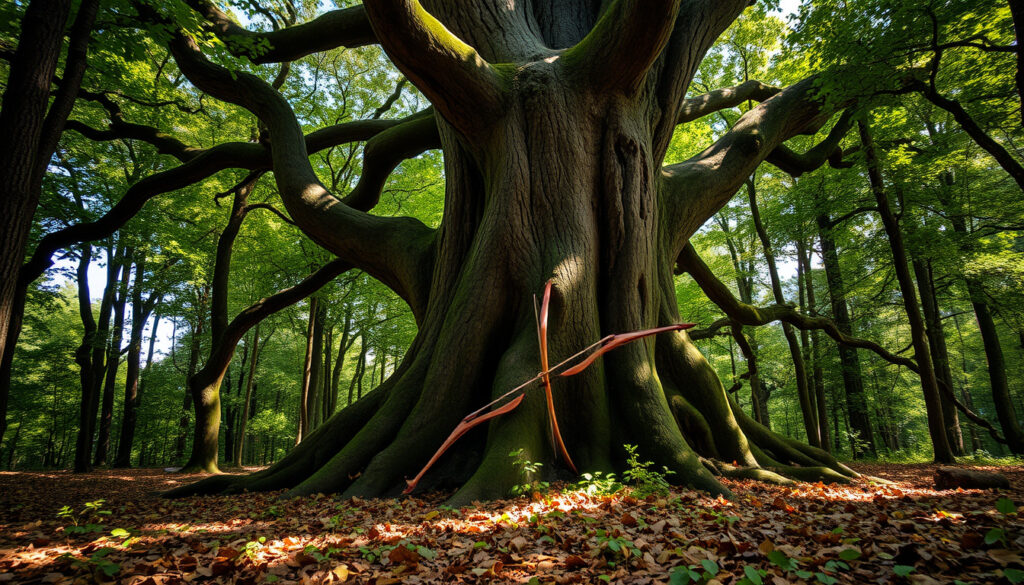
While Sherwood Forest in Nottinghamshire is the most famous setting associated with Robin Hood, some scholarly work suggests the original ballads may have been set in Barnsdale Forest, located in South Yorkshire. Regardless of the precise original location, the legend remains firmly tied to Sherwood. The Major Oak, a large and ancient oak tree, is a popular tourist attraction that tradition claims was a hiding place for Robin and his men.
The theme of robbing from the rich to give to the poor
The idea that Robin Hood’s central mission was to steal from the rich to give to the poor is a later addition to the legend. It does not appear in the earliest surviving ballads. Those early stories focus on Robin’s conflict with authority, his outlawry, and his violent deeds. The philanthropic motive was popularized in the 19th century.
Was Robin Hood a real person?
This is one of the most persistent questions about the legend. Despite centuries of searching, historians have not been able to identify a single, provable historical figure who matches the Robin Hood of folklore.
Historical records and early references
Medieval legal records contain references to people named “Robert Hood” or “Robyn Hode,” but there is no direct link connecting any of these individuals to the legendary outlaw. Some historians argue that the name may have been a generic label or an alias used by multiple outlaws over a long period, rather than a single person’s identity. The legend is attested in late medieval English literature, but as fiction, not as history.
The debate between fact and fiction
The debate among historians is ongoing. Some argue that the legend likely has roots in real social unrest and actual outlaws who lived outside the law in medieval England. Others maintain that the stories are purely literary inventions, drawing on older traditions of folk tales about forest outlaws. The BBC notes that historians have not identified a single provable “real Robin Hood.”
Possible historical candidates
Several candidates have been proposed over the years, including a man named Robin of Loxley, a knight named Robert FitzOdo, and others. However, none of these identifications have been accepted by the majority of historians. The consensus is that the legend is a composite, drawing on multiple outlaws, stories, and cultural traditions.
What are the best Robin Hood movies?
The Robin Hood story has been a staple of cinema since the early 20th century. According to TIME, since 1950, there has been “hardly a year” without some Robin Hood-related screen production. The following are some of the most notable film versions.
Robin Hood (2010) – Russell Crowe and Ridley Scott
Directed by Ridley Scott, this film stars Russell Crowe as Robin Longstride, an archer in the army of King Richard the Lionheart. The movie serves as a prequel to the traditional story, showing how Robin becomes an outlaw and a leader. It focuses on themes of justice and national identity against a backdrop of historical conflict with Norman invaders. The film is available to view on IMDb.
Robin Hood (1991) – Patrick Bergin and Uma Thurman
This version, produced for television, stars Patrick Bergin as Robin and Uma Thurman as Maid Marian. It is known for being a more historically grounded and darker interpretation of the legend, focusing on the political turmoil of the era. It was released in the same year as the more famous Kevin Costner film.
Robin Hood: Prince of Thieves (1991) – Kevin Costner
Kevin Costner stars in this blockbuster version, which became a major cultural phenomenon. The film features a strong supporting cast including Morgan Freeman and Alan Rickman, the latter of whom delivers a memorable performance as the Sheriff of Nottingham. It remains one of the most popular retellings of the story.
Robin Hood (2018) – Taron Egerton and Jamie Foxx
Directed by Otto Bathurst, this is a modern action-reboot starring Taron Egerton as Robin and Jamie Foxx as Little John. The film attempts to update the legend for a contemporary audience with a fast-paced, gritty style. Reviews from critics and audiences can be found on Rotten Tomatoes.
Disney’s Robin Hood (1973) – animated classic
This animated film from Disney is a beloved version for family audiences. It famously portrays the characters as anthropomorphic animals, with Robin as a fox, Little John as a bear, and Prince John as a lion. The film is known for its catchy songs and light-hearted tone.
Robin Hood (1922) – silent film with Douglas Fairbanks
Douglas Fairbanks starred in this silent adventure film, which was the first major cinematic adaptation of the legend. It was a critical and commercial success in its time and helped establish the visual iconography of the character for the film era.
The frequency of Robin Hood films and television shows increased dramatically after 1950. According to TIME magazine, there has been a new adaptation almost every year since then, making him one of the most adapted characters in screen history.
Where are Robin Hood themed pubs and locations?
The legend has left a tangible mark on the geography of the United Kingdom. Many locations, from ancient forests to modern pubs, are named after the outlaw.
Robin Hood pubs in the UK
There are many pubs named “Robin Hood” across the UK, with a high concentration in Nottinghamshire and the surrounding regions. Examples include pubs in Droitwich, Hull, Loughton, Ashton, and Amblecote. Each pub carries a name that reflects the enduring popularity of the local folklore.
Sherwood Forest and the Major Oak
Sherwood Forest remains the most important location associated with the legend. Visit Sherwood, the official tourism site, states that the name of Robin Hood has been synonymous with Sherwood Forest for more than 600 years. The Major Oak, which is estimated to be between 800 and 1,000 years old, is a key landmark that tradition links to the outlaws’ camp. For more details on this area, readers can explore articles on The history of Sherwood Forest.
Robin Hood’s Bay and other landmarks
Other named landscape sites connected to the legend include Robin Hood’s Cave, Robin Hood’s Stoop, and Robin Hood’s Well. Robin Hood’s Bay, a village on the Yorkshire coast, also takes its name from the legend, though there is no historical connection to the outlaw’s activities. These place names demonstrate how deeply the story is woven into the national landscape.
Is the Robin Hood investment app related to the legend?
The Robinhood financial trading platform is a modern company that uses the name of the legendary outlaw. However, there is no direct connection between the company and the folklore other than the borrowed name. The mission of the company is to provide commission-free stock trading, appealing to a sense of democratizing finance, which is a modern reinterpretation of the theme of redistributing wealth.
Key differences: stock trading vs folklore
The Robinhood app operates in the financial sector and is subject to financial regulations. It has faced significant regulatory scrutiny. The legend of Robin Hood, on the other hand, is a centuries-old folk tale about a literal outlaw who opposed authority. The app’s name is a commercial reference to that story, but it does not continue the narrative in any literal sense.
Timeline of Robin Hood in History and Media
- – Earliest literary reference to ‘Robin Hood’ in William Langland’s ‘Piers Plowman’.
- – The ‘Robin Hood and the Monk’ ballad recorded, one of the oldest surviving tales.
- – Anthony Munday’s plays introduce Maid Marian and cast Robin as a nobleman.
- – Joseph Ritson’s collection standardizes many tales.
- – Douglas Fairbanks stars in the first major Robin Hood film.
- – Errol Flynn’s ‘The Adventures of Robin Hood’ becomes a classic.
- – Disney’s animated ‘Robin Hood’ released.
- – Two major films released: ‘Prince of Thieves’ and a TV movie with Patrick Bergin.
- – Ridley Scott’s ‘Robin Hood’ starring Russell Crowe.
- – Taron Egerton stars in a modern action-reboot.
Certainty vs. Uncertainty: What We Know About Robin Hood
| Information that is established | Information that remains unclear |
|---|---|
| Robin Hood is a legendary figure rooted in English folklore. | Whether Robin Hood was a real historical person is unknown. |
| The earliest written references date to the 14th century. | The exact details of his life (noble birth, exile, etc.) are later additions. |
| Sherwood Forest is the traditional setting of the stories. | The ‘rob from the rich’ phrase is a 19th-century invention, not in early ballads. |
| Many films, books, and places have been named after him. | The identity of Maid Marian as a true love is a later invention. |
Analysis and Context: Why Robin Hood Endures
The enduring appeal of Robin Hood lies in his embodiment of rebellion against injustice. The legend likely emerged from the social unrest of medieval England, where outlaws were sometimes romanticized by a populace that felt oppressed by corrupt officials. Each generation reimagines Robin Hood to reflect contemporary values, whether that is environmentalism, class struggle, or the fight for good governance. The economic impact of the legend is also significant, driving tourism in Nottinghamshire and supporting a wide range of commercial activities.
Authoritative Sources and Quotations
“Legend has it that Robin Hood was an outlaw living in Sherwood Forest with his ‘Merry Men’ – but did he really exist and if so, how much of the legend is true?”
“The name of Robin Hood has been synonymous with Sherwood Forest for more than 600 years.”
Visit Sherwood
“Robin Hood is a legendary heroic outlaw originally depicted in English folklore and subsequently featured in literature, theatre, and cinema.”
What’s Next for Robin Hood?
New film adaptations are in development, and the legend continues to be adapted for streaming series and potentially interactive media. Sherwood Forest will remain a key tourist destination, and the historical debate may shift as new medieval documents are discovered. The name Robin Hood shows no sign of fading from the cultural conversation.
Frequently Asked Questions About Robin Hood
What is Robin Hood’s real name?
The legend does not provide a definitive real name; sometimes he is called Robin of Loxley or Robert of Huntington.
Did Robin Hood have a love interest?
Yes, Maid Marian was introduced in the 16th century and is now a staple of the legend.
What is the Robin Hood cartoon about?
The 1973 Disney animated film features animal characters, with Robin as a fox, and follows the familiar story of outwitting the Sheriff of Nottingham.
What is the Robin Hood 1991 movie?
There are two 1991 films: ‘Robin Hood: Prince of Thieves’ (Kevin Costner) and a more faithful version starring Patrick Bergin.
Where is the Robin Hood pub in Droitwich?
The Robin Hood pub is located in Droitwich, Worcestershire, and is one of many UK pubs named after the outlaw.
Is the Robinhood app safe?
The Robinhood investment app is a legitimate brokerage, but it has faced regulatory scrutiny; users should research before investing.
More related posts
 Harper Vivienne Ann Lockwood – Biography, Age and Family Facts
 Storm Huntley – Age, Husband, Net Worth and TV Career
 Samsung Galaxy Tab A9+ – Full 2025 Review, Price & Specs
 Helen George – Biography, Career, and Personal Life
 18 Weeks in Months – Exact Conversion and Pregnancy Guide
 Jackie Jackson – Biography, Net Worth and Jackson 5 Legacy
 Amber Strictly – From Love Island to Finalist Amid Hate Comments
 Louis Saha – Career, Net Worth, Wife and Where He Is Now