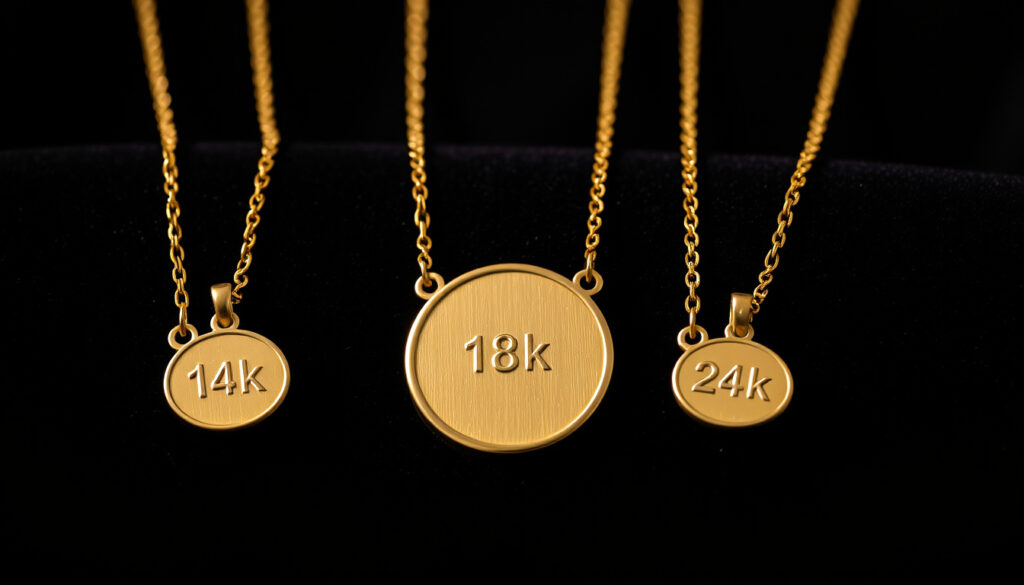
Gold Necklace – 14k vs 18k vs 24k – Which Karat Is Best
Choosing a gold necklace involves more than picking a style that catches the eye. The karat, the purity of the gold, determines how the piece looks, how long it lasts, and how much it costs. For many women, the decision comes down to finding the right balance between durability for daily wear and the rich colour of higher-purity gold.
This guide breaks down the differences between 14K, 18K, and 24K gold, explores popular necklace styles, and offers practical advice on pricing, care, and trusted brands. Whether you are buying your first solid gold chain or upgrading from a plated piece, understanding these fundamentals helps ensure your investment is a wise one.
14k vs 18k vs 24k Gold Necklace: Which Karat Is Best for You?
| Factor | Karat Guide | Popular Styles | Price Range | Care Tips |
|---|---|---|---|---|
| 14K | 58.3% gold; durable and affordable | Chains, pendants, chokers | $150–$500 | Wipe with soft cloth; resistant to scratches |
| 18K | 75% gold; richer colour, moderate durability | Tennis necklaces, luxury pendants | $300–$1,000 | Remove during heavy activity; store separately |
| 24K | 99.9% gold; soft, bright yellow | Investment bars, ceremonial pieces | $500+ | Not for daily wear; professional cleaning only |
- 14K gold is the most popular for everyday wear due to its balance of durability and affordability.
- 18K gold provides a richer yellow hue but scratches more easily than 14K.
- 24K gold is too soft for daily wear and is mainly used for special occasions or investment pieces.
- Gold plated necklaces offer a budget-friendly option but require more care to prevent fading.
- Chain style and length significantly affect the look – a 16-18 inch chain is standard for women.
- Layering 2-3 necklaces of varying lengths is a top trend for 2025.
| Attribute | 14K | 18K | 24K |
|---|---|---|---|
| Gold Purity | 58.3% (hallmark 585) | 75% (hallmark 750) | 99.9% (hallmark 999) |
| Common Price Range | $150 – $500 | $300 – $1,000 | $500 – $2,000+ |
| Best For | Active lifestyles, daily wear, stacking | Special occasions, heirloom pieces | Investment, cultural events, pure gold lovers |
| Hypoallergenic | Yes (alloy may contain nickel in some cases) | Yes (higher gold content, less alloy) | Yes (pure gold) |
According to the Gemological Institute of America (GIA), 14K gold offers a strong balance of durability and affordability, making it the top recommendation for necklaces worn daily. Brinkers Jewelers notes that 18K gold delivers a deeper, richer colour but is softer and shows wear more quickly. Meanwhile, GoldZenn and J&M Jewelry both caution that 24K gold (99.9% pure) is extremely soft and prone to deformation, making it unsuitable for everyday chain necklaces.
What Are the Best Gold Necklace Styles for Women in 2025?
Chain Styles and Width Recommendations
Popular chain widths for women range from 7mm to 12mm. Thicker chains make a bolder statement but also cost significantly more. For example, an 8mm Cuban link chain in 14K at 22 inches is priced around $13,452, while the same chain in 18K costs approximately $19,325, according to GoldZenn.
Cuban Link, Figaro, Rope, and Box Chains
Cuban link chains are classic, bold, and durable, making them a strong choice in 14K. Figaro, rope, and box chains offer elegance and versatility; opting for 18K adds a luxurious feel suitable for formal occasions. Brinkers Jewelers highlights that pendant chains should be sturdy enough to support the weight of a charm or gemstone, and 14K helps prevent bending under heavier pendants.
Length Guide for Women
Standard necklace lengths for women range from 16 to 20 inches. An 18- to 20-inch length is ideal for ensuring a pendant sits visibly on the chest. Shorter chains (16 inches) work well for choker styles, while longer chains (20 inches) suit layering and deeper necklines.
For a modern layered look, combine a 16-inch choker with an 18-inch pendant chain and a 20-inch longer chain. Mixing metal finishes – such as a polished 14K chain with a matte pendant – adds visual interest without clashing karats.
Gold Necklace Prices: How Much Should You Expect to Pay?
14K vs 18K vs 24K Pricing
14K gold offers the best value-to-durability ratio and serves as the standard for daily jewelry. 18K reflects a higher gold content and commands a premium price point, typically 43 to 65 percent more than 14K, depending on the width of the chain. 24K is rarely priced for jewelry; it is primarily used for investment bars and coins, as noted by Brinkers Jewelers.
Understanding the Jump Cost
Moving from 10K to 14K adds approximately 43 to 65 percent to the price. The step from 14K to 18K adds another 43 to 63 percent, varying by chain width and design. These jumps reflect the increased gold content and the market price of gold at the time of purchase.
Gold Plating and Its Cost Implications
Gold plated necklaces consist of a thin layer of gold electroplated onto a base metal such as brass or silver. They offer the look of solid gold at a fraction of the cost – typically $20 to $100 – but the plating will wear off over time, especially with frequent contact with skin and perfumes. The thickness of the plating (measured in microns) directly affects longevity: thicker plating (2–3 microns) lasts longer.
Current gold prices fluctuate weekly based on global market conditions, as tracked by the World Gold Council. For the most accurate pricing, always check the spot price of gold before making a significant purchase.
The step from 14K to 18K can add 43 to 63 percent to the price of the same chain. For an 8mm Cuban link, that means jumping from roughly $13,452 to $19,325. If budget is a primary concern, 14K delivers the best balance of cost and longevity for daily wear.
How to Care for Your Gold Necklace to Keep It Shining
Daily Care by Karat
14K gold is resistant to minor scratches and safe for occasional water exposure. Wiping it with a soft cloth after each wear helps maintain its shine. 18K gold requires more attention: remove it during sports or gym sessions, store it separately to prevent scratching, and clean it gently with mild soap and water. 24K gold should not be worn daily; it needs professional cleaning only and must be kept away from hard surfaces.
General Maintenance Tips
Avoid exposing any gold necklace to chlorine or harsh chemicals, as these can damage the metal alloys. Store necklaces in a soft pouch or a jewellery box with individual compartments to prevent tangling. For 18K and 24K pieces, professional polishing every one to two years helps restore the original lustre, as recommended by GoldZenn.
24K gold is extremely soft and can easily bend, scratch, or dent under normal daily activity. It is not recommended for necklaces intended for regular use. Reserve 24K for special occasions or investment purposes, and choose 14K or 18K for pieces you plan to wear often.
Top Gold Necklace Brands and Where to Buy
Choosing a reputable brand with certified purity and ethical sourcing ensures your necklace holds its value and is safe to wear. For 2025, look for hallmarks such as 585 for 14K and 750 for 18K. Brands like MollyJewelryUS offer high-purity options suitable for sensitive skin, while The Castle Jewelry provides educational guides for first-time buyers. For hallmark verification and purity standards, the Assay Office offers official information on gold markings.
| Brand | Specialty | Best For |
|---|---|---|
| Brilliant Earth | Ethical, conflict-free gold | Luxury 18K, designer styles |
| Brinkers Jewelers | Traditional, wide selection | 14K daily wear, engagement rings |
| GoldZenn | Competitive pricing, modern styles | 14K/18K chains, Cuban links |
| J&M Jewelry | Durability-focused | Active lifestyle 14K necklaces |
| MollyJewelryUS | High-purity options | Sensitive skin, 18K luxury |
| The Castle Jewelry | Buying guides, education | Beginners, 10K–18K comparison |
How Have Gold Necklace Trends Evolved Over the Years?
- 2010s – Minimalist fine chains and single pendants dominated the market.
- 2020 – Chunky curb chains and layered necklaces became popular, signalling a shift toward bolder styles.
- 2023–2024 – Paperclip chains, initial pendants, and bar necklaces emerged as top choices for personalised jewellery.
- 2025 – Mixed metals, zodiac pendants, and custom charms lead current trends, reflecting a desire for individual expression.
What Do We Know and What Remains Unclear About Gold Necklaces?
| Established Information | Information That Remains Unclear |
|---|---|
| 14K gold contains 58.3% gold, 18K contains 75%, and 24K contains 99.9%. | Long-term durability of gold plated necklaces varies widely by brand and care routine. |
| Gold plated necklaces have a thin layer of gold over base metal and can wear off over time. | Price fluctuations in the gold market affect retail prices weekly, making it hard to pin down exact costs. |
| 24K gold is too soft for daily wear and prone to scratching and bending. | Allergen risk in 14K gold depends on the specific alloy used; some blends contain nickel, which can cause reactions in sensitive individuals. |
For independent guidance on buying gold jewellery, Consumer Reports offers practical advice on evaluating quality and avoiding common pitfalls.
What Factors Should Guide Your Gold Necklace Decision?
The purpose of this guide is to help buyers make informed decisions by understanding karat differences, style options, and value. Key factors include the trade-off between gold purity and durability, your budget and the long-term value of the piece, your personal style and wearing habits, and the reputation of the brand and quality of craftsmanship. The target audience includes women seeking to buy a gold necklace, first-time buyers, and those upgrading from plated to solid gold.
The Federal Trade Commission (FTC) provides official guidelines on gold marking and advertising, which can help buyers verify the claims made by sellers and ensure they are getting what they pay for.
For those looking to expand their jewellery collection, the Pandora Rings – Price, Sale and Buying Guide for UK Shoppers offers practical tips on another popular accessory category.
What Do Jewelry Experts Say About Gold Necklace Quality?
“14k gold is the most popular choice for engagement rings and everyday jewelry because it offers a great balance of durability and affordability.”
— Gemological Institute of America (GIA)
“24k gold is rarely used in jewelry that is worn daily because it is too soft and can easily bend or scratch.”
— American Jewelry Association
“Gold plating on a necklace will eventually wear off, especially with frequent contact with skin and perfumes.”
— Jewelry Consumer Guides
The GIA’s gold quality and caratage guide provides authoritative reference on gold purity standards, karat measurement, and hallmarking practices.
Which Gold Necklace Is the Right Choice for You?
For daily wear, durability, and value, 14K gold is the strongest all-round option. If you prefer a richer colour and higher purity for special occasions, 18K gold offers a premium alternative. 24K is best reserved for investment or ceremonial use, not for everyday jewellery. Always check for certified hallmarks and buy from reputable sources to ensure your necklace holds its value and meets your expectations.
For more jewellery buying advice, see the Ray Bans – Complete UK Buying Guide for another perspective on choosing quality accessories.
Frequently Asked Questions
What does 18ct gold plating mean?
18ct gold plating means a thin layer of 75% pure gold has been electroplated onto a base metal (usually brass or silver). It offers the look of 18K gold at a lower cost but will wear off over time.
Are gold plated necklaces good quality?
Gold plated necklaces are affordable and stylish, but they are not as durable as solid gold. Quality depends on plating thickness – thicker plating (e.g., 2–3 microns) lasts longer.
How much does a 14k gold necklace cost?
A 14K gold chain necklace typically costs between $150 and $500 depending on weight, design, and brand. Pendants add extra cost.
Which brands offer the best gold necklaces?
Popular brands include Tiffany & Co. (luxury), Missoma (trendy mid-range), Orelia (affordable fashion), and Warren James (value). For solid gold, consider dedicated fine jewelers like Blue Nile or local reputable stores.
Can I wear a 24k gold necklace every day?
It is not recommended because 24K gold is very soft and can easily scratch or bend. It is better suited for occasional wear or special occasions.
What is the best gold necklace for layering?
For layering, choose chains of different lengths – such as a 16-inch choker, an 18-inch pendant chain, and a 20-inch longer chain – and mix textures for visual depth.
How do I prevent my gold necklace from tarnishing?
Store gold necklaces in a dry, soft pouch or jewellery box away from humidity. Avoid contact with perfumes, lotions, and household chemicals. Clean gently with a mild soap solution and a soft cloth.
Is 18K gold better than 14K for a necklace?
18K gold has a richer colour and higher purity, but it is softer and less durable than 14K. Choose 18K for special occasions and 14K for everyday wear.
What length gold necklace should I buy?
Standard lengths for women are 16 to 20 inches. An 18–20 inch chain is ideal for pendant visibility, while 16 inches works well for choker styles.
What is the difference between solid gold and gold plated?
Solid gold is made entirely of a gold alloy (e.g., 14K or 18K) throughout the piece. Gold plated jewellery has a thin layer of gold applied to a base metal, which can wear off over time.
More related posts
 Mark Ruffalo – Movies, Net Worth, Wife and Biography
 Oliver Reed – Biography, Cause of Death and Gladiator Legacy
 Leonard Nimoy – Cause of Death, Net Worth and Spock Legacy
 Anna Sawai – Biography, Age, Career and Awards
 What Doe TM Mean – Trademark, Pokémon and Slang Explained
 Joao Pedro – Chelsea Forward Stats, Biography, Transfer
 Michael Myers – Complete Guide to Mask, Actors and Movies
 Longest Bridge in the World – Record Length Maps and Facts