Richard Iii – Death, Skeleton Discovery and Lasting Legacy
Richard III of England ruled for just over two years, but his reign remains among the most debated in British history. The last Yorkist king and the final monarch of the Plantagenet dynasty, Richard died in battle at Bosworth Field in 1485, a defeat that ushered in the Tudor era.
His posthumous reputation was heavily shaped by Tudor propaganda and, most enduringly, by William Shakespeare’s portrayal of him as a manipulative villain. Yet the 2012 discovery of his skeleton beneath a car park in Leicester provided a new lens through which to examine his life, his death, and his contested legacy.
Modern archaeology and DNA analysis have confirmed many facts about his appearance and his violent end, while historical debate continues over his character and actions during his brief time as king.
How Did Richard III Die?
Born: 2 October 1452, Fotheringhay Castle, England
Reigned: 26 June 1483 – 22 August 1485
Died: 22 August 1485, Bosworth Field (killed in battle)
Burial: Rediscovered under a Leicester car park in 2012, reburied in Leicester Cathedral in 2015
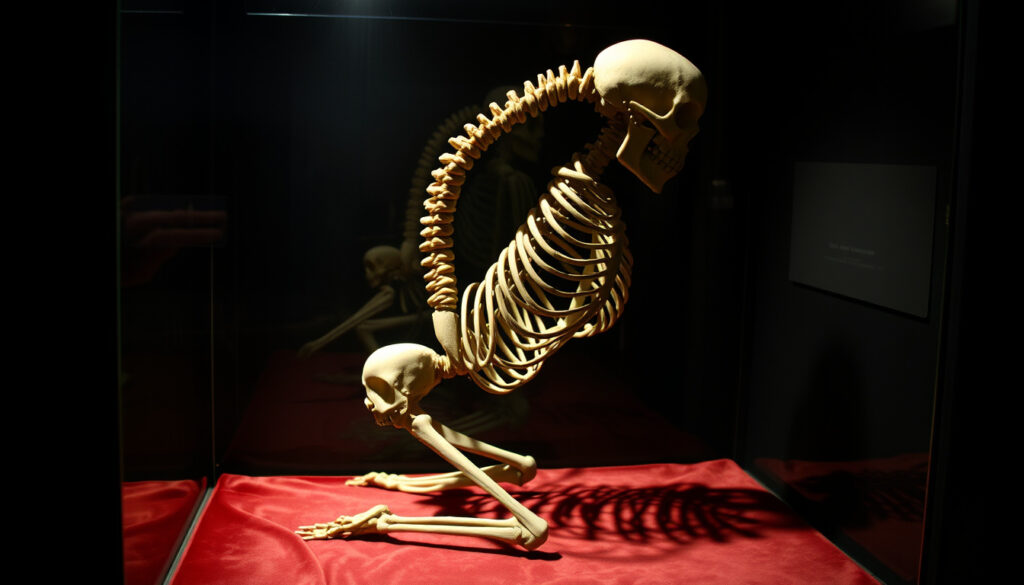
- Richard III’s skeleton, discovered in 2012, confirmed he had scoliosis, not a hunchback, and stood about 5’8″ tall.
- DNA from the skeleton was matched to two living descendants of Richard’s sister, confirming the identity with 99.999% certainty.
- Shakespeare’s famous portrayal of Richard as a psychotic hunchback is a work of Tudor propaganda, not historical fact.
- The cause of death was blunt force trauma from a halberd, sword, or dagger; the skeleton shows eight injuries to the skull.
- Richard was the last English king to die in battle, a distinction that underscores the violent end of the Plantagenet dynasty.
- The discovery of the remains under a council car park resolved a 500-year-old mystery about the fate of the king’s body.
- The archaeological find has prompted a major reassessment of Richard’s reputation, moving beyond the Shakespearean caricature.
| Fact | Detail |
|---|---|
| Full name | Richard Plantagenet |
| House | York (Plantagenet) |
| Coronation | 6 July 1483 |
| Spouse | Anne Neville (m. 1472; died 1485) |
| Children | Edward of Middleham (died 1484), possibly other illegitimate children |
| Height | Approximately 5’8″ (172 cm) – skeletal evidence |
| Cause of death | Killed in battle at Bosworth Field, age 32 |
| Notable | Last English king to die in battle; last king of the House of York |
The definitive identification was made by the University of Leicester – Richard III Discovery team in 2013. The skeleton’s condition perfectly matched contemporary descriptions of the king’s death, showing a body that had been subjected to significant violence on the battlefield.
Was Richard III a Good King?
The question of whether Richard was a good king is deeply tied to the circumstances of his accession and the fate of his nephews, the Princes in the Tower.
Why Did Richard III Kill the Princes in the Tower?
The disappearance of Edward V and his brother Richard of Shrewsbury shortly after Richard took the throne is one of history’s most famous mysteries. Richard declared the boys illegitimate and had them confined to the Tower of London. Whether he then ordered their murder remains unproven, though many historians believe their removal was the most convenient way to secure his position.
No contemporary documentary evidence directly ties Richard III to the disappearance of Edward V and Richard of Shrewsbury. The accusation was popularized by Tudor chroniclers like Thomas More, who wrote under the patronage of the Tudor court. The fate of the princes remains one of the most enduring unsolved mysteries in English history.
What Is Richard III’s Legacy Today?
Modern historians often offer a more nuanced view. Richard’s short reign included legal reforms and the introduction of the Court of Requests to help commoners. While his seizure of the throne was undeniably a power grab that created deep instability, many scholars argue that his reputation as a purely evil figure is largely a construct of Tudor propaganda. The discovery of his remains has shifted the focus toward a more evidence-based assessment of his rule.
Did Richard III Have Children?
Richard III had one legitimate son, Edward of Middleham, who was created Prince of Wales but died in 1484 at around the age of ten. Richard also had a wife, Anne Neville, whom he married in 1472. Anne died in March 1485, just months before Richard’s own death at Bosworth. The precise number of other children, if any, remains uncertain.
Who Was Richard III’s Wife?
Anne Neville was the daughter of the powerful Earl of Warwick, known as the Kingmaker. Her marriage to Richard in 1472 was politically significant, consolidating the Yorkist alliance. She was crowned queen alongside Richard in 1483.
How Tall Was Richard III?
Analysis of his skeleton showed that Richard was approximately 5’8″ tall. This height was perfectly average for a medieval man of his era, contradicting later suggestions that he was significantly undersized.
Was Richard III a Hunchback?
The skeleton found in Leicester provided definitive answers to these questions. Richard did not have a hunchback. The skeleton showed severe scoliosis, a curvature of the spine, which would have made one shoulder slightly higher than the other. Shakespeare’s description of “deformed, unfinished” was a dramatic exaggeration.
DNA and skeletal analysis confirmed Richard III had adolescent-onset scoliosis, a condition that causes a sideways curvature of the spine. This would not have been visibly crippling or a ‘hunchback’ as caricatured by Shakespeare. The skeleton was otherwise well-formed, challenging the Tudor narrative of a monstrous physique mirroring a monstrous soul.
Is the Shakespeare Play Richard III Historically Accurate?
No. Shakespeare’s Richard III is a masterpiece of drama but is not historically accurate. The play was written during the Tudor dynasty and relies heavily on the accounts of Tudor historians, particularly Thomas More and Raphael Holinshed, who had a vested interest in vilifying the last Yorkist king. The play continues to shape public perception and is regularly performed at venues like Shakespeare’s Globe – Richard III.
What Is the Best Richard III Book?
Several modern works aim to separate fact from fiction. Popular choices include The King’s Grave by Philippa Langley and Michael Jones, which details the search for Richard’s remains, and Richard III: A Life by Paul Murray Kendall, a classic biography. For readers interested in the archaeological discovery, Richard III: The Road to Leicester by Amy Licence provides a thorough account.
Which Richard III Movie Is Most Accurate?
The 1995 film starring Ian McKellen is a celebrated adaptation of Shakespeare’s play, but it does not aim for historical accuracy. For a documentary account, the 2016 film Richard III: The Unseen Story or the BBC’s Richard III: The King in the Car Park provide the most factual coverage of the discovery and identification of his remains.
Historians rely on a range of sources for the reign of Richard III: official records, foreign chronicles, and physical evidence from the skeleton. The most reliable primary sources are the records held by The National Archives – Richard III, which reveal a king heavily involved in the administration of justice and the management of his estates, offering a stark contrast to the Shakespearean villain.
What Happened to Richard III’s Body After Bosworth?
The journey of Richard’s body from the battlefield to a royal reburial in the 21st century is a remarkable story of loss and rediscovery.
- – Richard is born at Fotheringhay Castle.
- – Richard marries Anne Neville.
- – Richard seizes the throne; the Princes in the Tower disappear.
- – Richard is killed at the Battle of Bosworth Field. His body is brought to Leicester.
- – Richard’s remains are hastily buried at the Greyfriars friary in Leicester.
- – Greyfriars is dissolved during the Dissolution of the Monasteries. The location of the grave is lost.
- – A skeleton with battle injuries and spinal curvature is uncovered by a University of Leicester archaeology team excavating a car park on the site of the former friary.
- – DNA analysis confirms the skeleton is Richard III.
- – Richard III is reburied with full honors in Leicester Cathedral – Richard III Reburial.
The discovery was hailed as one of the most significant archaeological finds of the century, resolving a 500-year-old mystery about the fate of the king’s body.
What Is Proven and What Is Unclear About Richard III?
Despite the wealth of information available, significant uncertainties remain about Richard III’s life and rule. Historians divide the information into established evidence and lingering uncertainties.
| Established Information | Information That Remains Unclear |
|---|---|
| Richard III died at Bosworth Field in 1485. | Whether Richard ordered the murder of the Princes in the Tower – no direct evidence exists. |
| His skeleton was found under a car park in Leicester in 2012. | Shakespeare’s portrayal is largely fictionalised, written as Tudor propaganda. |
| He had scoliosis, not a hunchback. | The exact number of Richard’s children is unknown. Only one legitimate son is confirmed. |
| His cause of death was multiple head wounds from battle. | Details of his personal appearance beyond skeleton measurements remain speculative. |
| He was the last Plantagenet king. | The full historical assessment of his administrative abilities is still debated. |
What Was the Historical Context of Richard III’s Reign?
Richard came to power during the Wars of the Roses, a series of civil wars fought between the houses of Lancaster and York for control of the English throne. His brother, King Edward IV, had secured the crown for the Yorkists. Following Edward’s sudden death in 1483, Richard was named Lord Protector for the young Edward V. Instead of allowing the coronation, Richard declared the marriage of Edward IV to Elizabeth Woodville invalid, making the princes illegitimate, and took the throne for himself.
His reign was immediately challenged by the heirs of the Lancastrian claim, led by Henry Tudor. The resulting confrontation at Bosworth Field ended Richard’s life and his dynasty, replacing Plantagenet rule with the Tudor dynasty. The Tudors worked hard to legitimize their rule, partly by demonizing Richard. This narrative was amplified over a century later by Shakespeare, sealing Richard’s image as a villain in the popular imagination.
Unlike the well-documented reign of Queen Victoria – Full Biography, Family Tree and Cause of Death, Richard’s time as king is poorly recorded by contemporary chroniclers, leaving much to interpretation and later political spin.
What Are the Key Sources on Richard III?
Historians studying Richard III must navigate a landscape of chronicles, official documents, and literary works, while also incorporating modern scientific evidence.
“Now is the winter of our discontent” – William Shakespeare, Richard III (Act 1, Scene 1)
This famous opening line from Shakespeare’s play has shaped the popular image of Richard as a master manipulator. However, the play is not a primary historical source but a work of Tudor-era fiction.
“The discovery of Richard III is one of the most important archaeological finds of the century” – University of Leicester
The archaeological work by the University of Leicester provided the most concrete evidence about Richard’s death and appearance, transforming the study of his reign.
“The last English king to die in battle” – common historical epitaph
This fact underscores the violent transition between dynasties that defines the end of the Plantagenet era.
Primary sources include royal documents held by The National Archives, which give a direct view of his governance. For a comprehensive modern overview, the Wikipedia – Richard III of England entry offers a well-sourced summary, while Britannica – Richard III Biography provides an authoritative biography.
What Is Richard III’s Lasting Legacy?
Richard III’s legacy is a study in contrasts. The last English king to die in battle, he is both the archetypal Shakespearean villain and a figure of renewed historical interest following the dramatic discovery of his remains. The 2012 excavation replaced speculation about his appearance with scientific fact, confirming his scoliosis but disproving the hunchback caricature. His brief reign continues to be debated, but the archaeological story has given him a powerful, tragic dimension that transcends the Tudor narrative. The life and death of this complex king continue to resonate, much like other prominent figures in Tudor history such as Catherine Parr – The Wife Who Survived Henry VIII, whose story also challenges popular historical myths.
Frequently Asked Questions About Richard III
Where was Richard III’s body originally buried?
He was buried at Greyfriars friary in Leicester. The site was later demolished and became a council car park, where his skeleton was found in 2012.
How long did Richard III reign as king?
Richard III reigned for just two years and two months, from 26 June 1483 until his death on 22 August 1485.
Who defeated Richard III at the Battle of Bosworth?
Richard was defeated by Henry Tudor, who then ascended the throne as Henry VII, the first monarch of the Tudor dynasty.
Where can I learn more about the Richard III excavation?
The University of Leicester has a dedicated website documenting the search, discovery, and identification of Richard III’s remains.
How old was Richard III when he died?
Richard III was 32 years old when he was killed at the Battle of Bosworth Field on 22 August 1485.
Is Richard III buried in Westminster Abbey?
No. Richard was buried in Leicester. His remains were reburied in Leicester Cathedral in 2015.
What does Richard III’s skeleton tell us about his death?
The skeleton shows ten injuries, including eight wounds to the skull, consistent with fatal blows from a halberd, sword, or dagger while he was in the thick of battle.
More related posts
 Tom Ackerley – Biography, Net Worth, and Marriage to Margot Robbie
 Narinder Kaur – Biography, Career and Laurence Fox Case
 Finty Williams – Biography, Age, Career, and Family Life
 Mick Hucknall – Net Worth Daughter and Simply Red Songs 2025
 Violet Myers – Master Missing Input Across Machine Learning and Web Dev
 England Cricket Team vs India National Team Players – 2025
 Stefanos Tsitsipas – Ranking, Age, Net Worth and 2025 Outlook