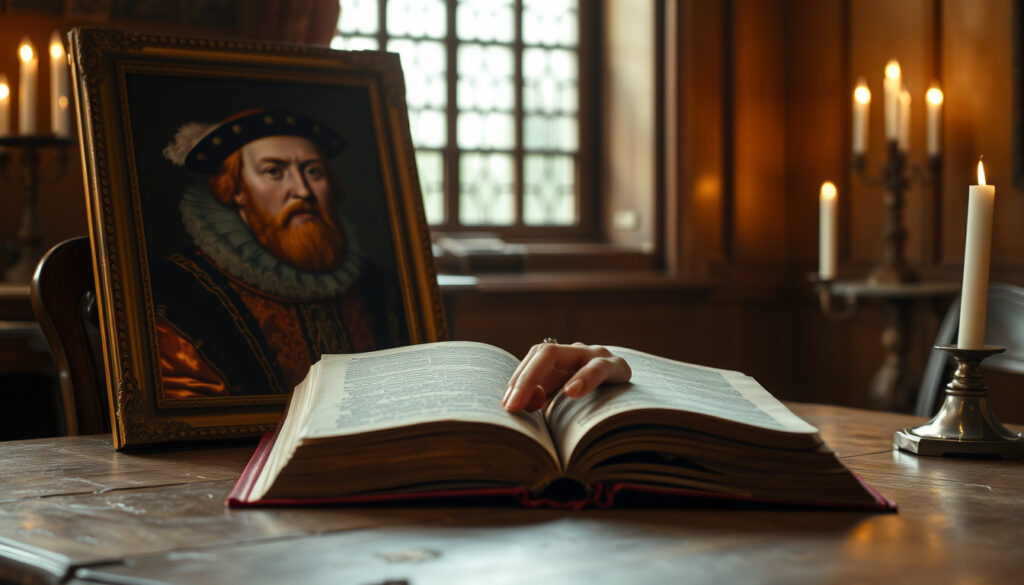
Catherine Parr – The Wife Who Survived Henry VIII
Catherine Parr, the sixth and final wife of King Henry VIII, is remembered as the Tudor queen who outlived her notorious husband. She was a published author, a devoted stepmother, and a committed advocate for the English Reformation. Her life, marked by four marriages and a sudden death shortly after childbirth, continues to fascinate historians and the public alike.
Born around 1512, Catherine Parr was the eldest daughter of Sir Thomas Parr, a courtier and descendant of Edward III. She received a humanist education and grew into a gifted scholar. Her intelligence and religious convictions would later define her role as queen consort and regent.
Parr’s marriage to Henry VIII in 1543 made her queen of England and Ireland. She served for three and a half years until Henry’s death in 1547, after which she married Thomas Seymour. She died in September 1548, just days after giving birth to her only child, Mary Seymour.
Who Was Catherine Parr? Biography of Henry VIII’s Sixth Wife
- Catherine Parr is historically unique as the wife who “survived” Henry VIII, outliving him and playing a key role in the education of his children.
- She was a published author, a rare achievement for a woman of her time, and a strong advocate for Protestant reform.
- Her death shortly after childbirth remains a subject of historical debate, with theories ranging from puerperal fever to possible poisoning.
- The spelling “Katherine” vs “Catherine” is a modern distinction; both were used interchangeably in her lifetime.
- She served as Queen Regent in 1544, governing England while Henry campaigned in France.
- She helped reconcile Henry VIII with his daughters Mary and Elizabeth, restoring them to the line of succession.
| Category | Detail |
|---|---|
| Birth | 1512, possibly at Kendal Castle, Westmorland, England |
| Death | 5 September 1548, Sudeley Castle, Gloucestershire, England |
| Spouses | Sir Edward Burgh (1529–1533), John Neville, 3rd Baron Latimer (1534–1543), Henry VIII (1543–1547), Thomas Seymour (1547–1548) |
| Children | Mary Seymour (born 1548, died young) |
| Religion | Protestant (reformer) |
| Notable Works | Prayers or Meditations (1545), The Lamentation of a Sinner (1547) |
How Did Catherine Parr Die? Cause of Death and Final Years
Catherine Parr died on 5 September 1548 at Sudeley Castle in Gloucestershire, five to six days after giving birth to her daughter Mary Seymour. She was 36 years old. The accepted cause is “childbed fever” (puerperal fever), a postpartum infection common in the Tudor era due to poor hygiene. She was buried at Sudeley Castle, where her tomb remains today.
Puerperal fever was a frequent cause of maternal death in the 16th century. Modern historians agree that Catherine Parr most likely died from this infection, though some have speculated about poisoning by Thomas Seymour or others. No conclusive evidence supports the poisoning theory.
After Henry VIII’s death in January 1547, Parr married Thomas Seymour, the brother of Jane Seymour, in a secret ceremony. The marriage was politically risky and controversial. Less than a year after her death, Thomas Seymour was executed for treason, leaving their infant daughter an orphan. More details on the fate of the Lady Sarah Chatto illustrate how later royal descendants navigated complex family histories.
Did Catherine Parr Have Children? Family and Marriages
Catherine Parr was married four times, the most of any English queen. Her first three marriages produced no children, but she became a stepmother to the children of her second husband, John Neville, and later to Henry VIII’s three children: Mary, Elizabeth, and Edward.
First Marriage: Edward Burgh (1529)
Parr married Sir Edward Burgh in 1529 when she was about 17. He died the same year, leaving her a widow without children.
Second Marriage: John Neville, 3rd Baron Latimer (1533)
She married John Neville in 1533, becoming stepmother to his children. He died in 1542, and they had no children together.
Third Marriage: Henry VIII (1543)
Married on 12 July 1543 at Hampton Court Palace, she was queen for three and a half years. She helped reconcile Henry with his daughters and oversaw the education of Prince Edward.
Fourth Marriage: Thomas Seymour (1548)
Six months after Henry’s death, Parr secretly married Thomas Seymour. She gave birth to their daughter, Mary Seymour, on 30 August 1548.
Mary Seymour was named after Parr’s stepdaughter, the future Mary I. Parr died days after childbirth. Historical records suggest Mary died in infancy; the last mention of her is around 1550. She became an orphan when Thomas Seymour was executed in 1549.
What Was Catherine Parr’s Role in the English Reformation?
Catherine Parr was a passionate supporter of the English Reformation and Protestant evangelicalism. She was a published author, writing works that advocated for biblical translation and personal interpretation of scripture. Her most famous books are Prayers or Meditations (1545) and The Lamentation of a Sinner (1547).
As Queen Regent in 1544, she demonstrated significant administrative capability while Henry VIII waged war in France. She also played a crucial role in reconciling Henry with his daughters Mary and Elizabeth, restoring them to the line of succession. Historians credit her with cultivating the scholarly qualities of the future Queen Elizabeth I.
Parr’s outspoken Protestant views nearly led to her arrest for heresy in 1546. She managed to placate Henry, but the episode highlights the political danger she navigated. The extent of her direct influence on Henry’s religious policies remains debated among historians.
Her patronage extended to reformist architects, and she contributed to the foundation of Trinity College, Cambridge. Modern historians view her as an energetic and politically significant queen who helped shape the religious and educational landscape of late Tudor England.
Timeline of Catherine Parr’s Life
- 1512 – Born to Sir Thomas Parr and Maud Green, likely at Kendal Castle.
- 1529 – Marries first husband, Sir Edward Burgh.
- 1533 – Burgh dies; Catherine becomes a widow.
- 1534 – Marries second husband, John Neville, 3rd Baron Latimer.
- 1543 – Marries King Henry VIII as his sixth wife.
- 1544 – Appointed Regent while Henry VIII is in France.
- 1545 – Publishes Prayers or Meditations.
- 1547 – Henry VIII dies; Catherine marries Thomas Seymour.
- 1548 – Gives birth to daughter Mary Seymour; dies on 5 September.
Certainty vs. Uncertainty: What We Know and What Is Debated
| Topic | Established Information | Information That Remains Unclear |
|---|---|---|
| Cause of death | Historians agree she died shortly after childbirth, likely from puerperal fever (childbed fever). | Some theories suggest possible poisoning by Thomas Seymour or others, but no conclusive evidence exists. |
| Spelling of her name | Both “Catherine” and “Katherine” were used in her lifetime; there is no “correct” single spelling. | Modern historians often prefer “Katherine” to distinguish her from other Catherines, but both are accepted. |
| Her religious influence | She was a known Protestant reformer and published religious works. | The extent of her direct influence on Henry VIII’s religious policies is debated. |
What Is Catherine Parr Known For? Historical Context and Analysis
Catherine Parr’s role as regent in 1544 demonstrated her political capability and the trust Henry VIII placed in her. Her marriage to Thomas Seymour after Henry’s death was controversial and politically risky, reflecting the precarious position of a former queen consort.
Her writings contributed to the spread of Protestant ideas in England and set a precedent for female authorship. Her death at Sudeley Castle marked the end of an era; she was buried there, but her grave was lost for centuries before being rediscovered in the 18th century.
Once viewed as a “saintly nurse,” modern historians recognize Parr as an energetic, passionate, and politically significant queen who survived dangerous plots for heresy and shaped the religious and educational landscape of late Tudor England. Her legacy includes her published works and her influence on the future Queen Elizabeth I. Readers interested in the broader sweep of English monarchy may also wish to read a biography of William Conqueror – The Norman King’s Biography and Legacy.
What Do Historians Say? Sources and Expert Quotes
“Catherine Parr was Queen of England and Ireland as the last of the six wives of King Henry VIII.”
– Wikipedia
“The sixth and last wife of Henry VIII, Katherine Parr (1512–48) has gone down in history as the wife who ‘survived’.”
– HistoryExtra
“Katherine was an energetic and passionate Queen Consort — a published author, loving stepmother, and outspoken supporter of the English Reformation.”
– Historic Royal Palaces
For further reading, explore the life of Catherine Parr on Wikipedia and Britannica’s entry. Additional details from Historic Royal Palaces and HistoryExtra offer deeper insight into her life. The site of her burial is preserved at Sudeley Castle.
Catherine Parr: The Wife Who Survived
Catherine Parr’s story is one of survival, intellect, and influence. She outlived Henry VIII, wrote books, championed Protestant reform, and helped shape the future of England through her stepchildren. Her sudden death after childbirth cuts her story short, but her legacy endures. To learn about another major figure from British royal history, read the biography of William Conqueror – The Norman King’s Biography and Legacy. For a more modern royal connection, see Lady Sarah Chatto – Biography, Net Worth and Private Life.
Frequently Asked Questions About Catherine Parr
Was Catherine Parr related to Catherine Howard?
Yes, they were cousins. Catherine Howard was the fifth wife of Henry VIII, and Catherine Parr was the sixth. Both were from noble families, but they were not closely related.
Did Catherine Parr write any books?
Yes, she was a published author. Her most famous works are Prayers or Meditations (1545) and The Lamentation of a Sinner (1547).
How many times was Catherine Parr married?
She was married four times: to Sir Edward Burgh, John Neville, Henry VIII, and Thomas Seymour.
What happened to Catherine Parr’s daughter?
Her daughter, Mary Seymour, was born in 1548. Historical records suggest she died in infancy, though the exact date is unknown.
Where is Catherine Parr buried?
She is buried at Sudeley Castle in Gloucestershire, England. Her grave was rediscovered in the 18th century.
More related posts
 Keith Andrews – From Set-Piece Coach to Brentford Head Coach
 Debbie Gwyther – Manager, Twin Sister, and Oasis Reunion Key Figure
 Ben Starr – The Voice of Clive Rosfield in FFXVI
 Adrian Scarborough – Height, Wife, and Complete Career Guide
 Claressa Shields – Latest Updates on Next Fight and Career
 Toby Carvery Discount Code – Latest NHS App and Kids Deals