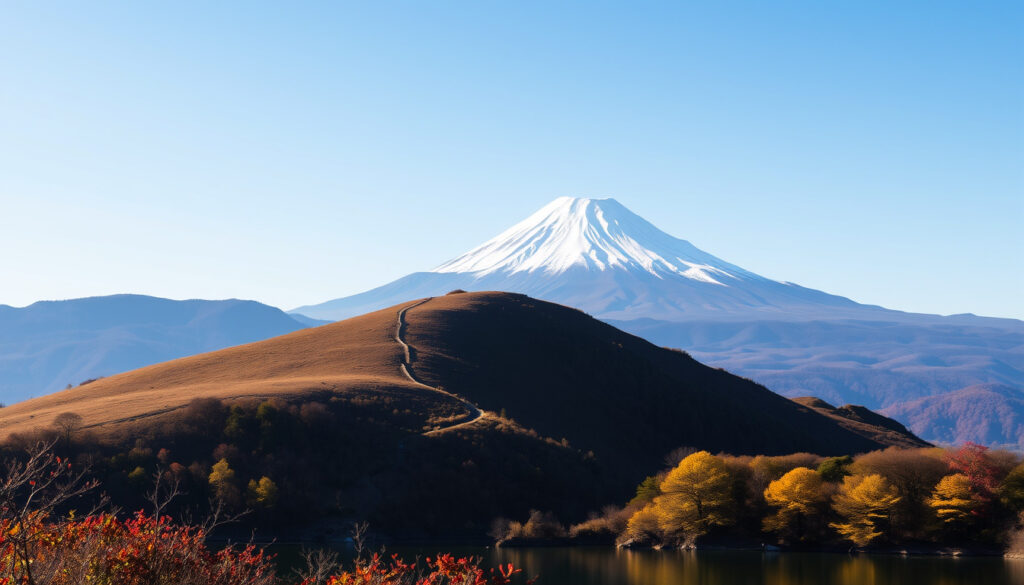
Mount Fuji – Height, Last Eruption, and Climbing Guide
Mount Fuji stands as Japan’s most recognizable natural landmark, a near-perfect symmetric cone that has drawn pilgrims, artists, and travelers for centuries. Located about 100 km southwest of Tokyo on the border of Shizuoka and Yamanashi prefectures, this active stratovolcano reaches 3,776 m (12,389 ft) and remains a deeply revered cultural symbol. Its last eruption, the Hōei event of 1707–1708, sent ash as far as Edo, modern-day Tokyo, a reminder that the mountain is very much alive.
For anyone planning a visit, timing matters. The official climbing season runs from July 1 to September 10 for the Yoshida Trail, and from July 10 to September 10 for the other three main routes. Outside that window, snow, ice, and extreme weather make the ascent dangerous. Each year, roughly 200,000 to 300,000 people climb the mountain, drawn by the challenge and the promise of sunrise from the summit.
Beyond climbing, Mount Fuji offers a rich mosaic of experiences. The surrounding five lakes — Kawaguchi, Yamanaka, Sai, Motosu, and Shōji — provide stunning viewpoints, while nearby cities such as Gotemba, Fujiyoshida, and Fujinomiya serve local specialties and host hot spring resorts. Designated a UNESCO World Heritage site in 2013, the mountain continues to hold profound religious significance in Shinto and Buddhist traditions.
How Tall Is Mount Fuji and Where Is It Located?
- Mount Fuji is Japan’s tallest peak and an active stratovolcano, though its last eruption was more than 300 years ago.
- The official climbing season runs from early July to early September; outside this period, climbing is dangerous and not recommended.
- Tokyo lies roughly 100 km away, but Fuji is visible from the city on clear days and easily reachable by train and bus.
- The mountain became a UNESCO World Heritage site in 2013 and is part of Fuji-Hakone-Izu National Park.
- Four main climbing trails lead to the summit, each with a different level of difficulty and a distinct starting point.
- Five lakes — Kawaguchi, Yamanaka, Sai, Motosu, and Shōji — ring the base, offering rest, dining, and panoramic views.
| Fact | Detail |
|---|---|
| Height | 3,776 m (12,388 ft) |
| First Ascent | 663 AD (by an anonymous monk) |
| Last Eruption | 1707–1708 (Hōei eruption) |
| Volcanic Type | Active stratovolcano (composite) |
| Coordinates | 35.3606° N, 138.7274° E |
| Age | Estimated 100,000 years (current cone) |
| Official Climbing Season | July 1 – September 10 (approx) |
| UNESCO Status | World Heritage Site (since 2013) |
When Did Mount Fuji Last Erupt and Is It Still Active?
Is Mount Fuji an Active Volcano?
Yes, Mount Fuji is classified as an active stratovolcano, also known as a composite volcano. It sits on the Izu–Bonin–Mariana Arc, a region of significant tectonic activity. The Japan Meteorological Agency monitors the mountain continuously with seismometers and GPS instruments, watching for any signs of unrest.
While Mount Fuji is monitored around the clock, experts cannot predict the exact timing of a future eruption. Current models for ash fall and lava flow exist, but the precise impact on Tokyo depends on wind direction and eruption size at the time. The Japan Meteorological Agency provides regular updates on volcanic activity.
The Last Eruption: The Hōei Event of 1707–1708
The most recent eruption began on December 16, 1707, and lasted about 16 days. Known as the Hōei eruption, it produced a massive ash plume that reached Edo (now Tokyo) and blanketed surrounding farmlands. Historical records and tephra layers confirm this event, which is considered a moderate-to-large eruption by geological standards. Major eruptions at Mount Fuji occur roughly every 500 years, according to Britannica.
How Often Does Mount Fuji Erupt?
Geological evidence indicates that significant eruptions happen on a timescale of several centuries. The last one was in 1707–1708, and before that, records point to earlier events in the 9th and 11th centuries. The volcano’s current cone began forming about 100,000 years ago, and volcanic activity has shaped the mountain ever since. A Japanese tradition holds that the mountain formed in 286 BCE after an earthquake, though this story is not supported by modern geology.
How Can You Get to Mount Fuji from Tokyo?
By Bus and Train from Tokyo
Direct buses depart from Shinjuku, Tokyo Station, and Shibuya, reaching the Fuji Subaru Line 5th Station in about 2.5 to 3 hours. This is the most convenient option for climbers. Alternatively, travelers can take the JR train to Shin-Fuji Station (roughly 1.5 hours from Tokyo) and then transfer to a local bus that goes up to the 5th Station. For those driving, the Chūō Expressway connects to the Fuji Subaru Line Road, which is open almost year-round except during heavy winter snow.
Best Time to Visit Mount Fuji
The ideal period for climbing is the official season, which runs from early July to early September. The busiest weeks fall during school vacations (July 20 to August 31) and Obon Week in mid-August, when queues can form at narrow trail sections. Outside the climbing season, from late November to mid-April, the mountain is covered in snow and ice, and climbing is not recommended. For sightseeing without climbing, spring and autumn offer milder weather and clearer views.
Is Mount Fuji Visible from Tokyo?
On clear days, particularly in winter, Mount Fuji can be seen from central Tokyo, Yokohama, and even farther afield in Chiba, Saitama, and Ibaraki. The best viewing spots include the Tokyo Skytree, Roppongi Hills, and high-rise buildings in Shinjuku. Visibility is highest when humidity is low and winds are strong from the northwest.
What Are the Best Things to Do at Mount Fuji? (Climbing, Dining & More)
Can You Climb Mount Fuji?
Yes. Each year, hundreds of thousands of people make the ascent. The climb is safest during the official season, when mountain huts are open, trails are clear, and weather conditions are relatively stable. Climbers should prepare for altitude sickness, cold temperatures at the summit, and crowded paths. A sunrise summit climb — known as goraiko — is a particularly popular experience, with many hikers starting in the evening to reach the top by dawn.
Trailheads are closed between 2 PM and 3 AM unless you have a reservation at a mountain hut. Plan your start time accordingly. The ascent typically takes 5 to 10 hours depending on the route, while the descent takes 3 to 4 hours. Carrying enough water, warm layers, and a headlamp is essential.
Popular Climbing Routes on Mount Fuji
Four main trails lead to the summit. The Yoshida Trail, starting from the Fuji Subaru Line 5th Station, is the most accessible from Tokyo and takes 5 to 7 hours up. The Fujinomiya Trail is the shortest ascent at 4 to 6 hours. The Subashiri Trail is less crowded and takes 5 to 7 hours. The Gotemba Trail is the longest, requiring 7 to 10 hours. Each route offers a different character and level of difficulty.
What Is the Mount Fuji 5th Station?
The 5th Station, located at about 2,300 m elevation on the Yoshida Trail, serves as the main starting point for most climbers. It is accessible by road from Tokyo and remains open year-round. The station has parking, restaurants, shops, and information facilities. Other trails also have their own 5th Stations, but the Fuji Subaru Line 5th Station is the busiest.
Restaurants and Dining Near Mount Fuji
The area around the mountain offers a variety of local food experiences. In Gotemba, visitors find shopping outlets, ramen shops, and hot spring resorts. Fujiyoshida features Yatsuho Street with restaurants and cafes, plus Hirayama Ichi for local dishes. Fujinomiya is known for Fujinomiya yakisoba, a street noodle specialty. Lake Kawaguchi has lakeside restaurants and onsen with views of the mountain. Nearby Hakone offers luxury resorts, hot springs, and high-end dining with Fuji as a backdrop.
Simple meals such as curry and ramen are available at mountain huts along the climbing routes during the official season. Reservations are required for overnight hut stays, which include a meal and a sleeping space. The 5th Station also has several restaurants and snack bars.
What Makes Mount Fuji Culturally Significant?
Mount Fuji has been a sacred site in Shinto and Buddhist traditions for centuries. Pilgrims have climbed it as an act of devotion, and shrines at the base and summit continue to host religious ceremonies. The mountain appears in classical Japanese poetry, including the Man’yōshū, and has been immortalized in ukiyo-e woodblock prints by artists such as Hokusai and Hiroshige. Hokusai’s series “Thirty-Six Views of Mount Fuji” remains one of the most recognized art collections in the world.
Beyond art and religion, Fuji is a national symbol. Its symmetrical shape appears on currency, in corporate logos, and in countless photographs. The UNESCO World Heritage designation in 2013 recognized the mountain not only for its natural beauty but also for its cultural importance as a pilgrimage site and artistic muse. Visitors today continue to experience this layered significance, whether they climb to the summit or simply gaze at the peak from a lakeside onsen.
A Timeline of Key Events in Mount Fuji’s History
- ~100,000 years ago — Formation of the current volcano (Shin-Fuji) begins.
- 663 AD — First recorded ascent by an unnamed monk.
- 1707–1708 — Last confirmed eruption (Hōei eruption) — ash reaches Edo (Tokyo).
- 1860 — First ascent by a foreigner, Sir Rutherford Alcock.
- 1936 — Mount Fuji becomes part of Fuji-Hakone-Izu National Park.
- 2013 — Inscribed as a UNESCO World Heritage Site (cultural).
- 2024 — Trail restrictions and an online reservation system are introduced to manage overtourism.
Certainty vs. Uncertainty: Mount Fuji’s Volcanic Status
| Aspect | What Is Known | What Remains Unclear |
|---|---|---|
| Current activity status | Mount Fuji is an active volcano. The Japan Meteorological Agency monitors it with seismometers and GPS. | No signs of an impending eruption have been detected as of 2025. |
| Risk of imminent eruption | Historical patterns suggest major eruptions every 500 years or so. | Experts cannot predict the exact timing of the next eruption. |
| Last eruption date | The Hōei eruption concluded in early 1708, confirmed by historical records and tephra layers. | No dispute — this is firmly established. |
| Potential eruption effects | Computer models exist for ash fall and lava flow scenarios. | The exact impact on Tokyo depends on wind direction and eruption size, which cannot be forecast far in advance. |
Mount Fuji in Context: Geology, Culture, and Modern Tourism
Geologically, Mount Fuji is a triple-junction volcano, sitting where the Pacific, Philippine Sea, and Eurasian plates meet. This tectonic setting gives it a distinctive shape and a history of explosive eruptions. Compared with other Japanese volcanoes such as Mt. Sakurajima or Mt. Asama, Fuji is less frequently active but capable of large events. The USGS monitors volcanic activity worldwide, providing comparative data on Fuji and similar stratovolcanoes.
Culturally, the mountain has played a central role in Shinto and Buddhist practice for more than a millennium. Pilgrimages to the summit were once common among religious devotees, and the mountain remains dotted with shrines and sacred sites. In art, Hokusai’s prints and the many poems written about Fuji have cemented its status as a national icon.
On the tourism front, the mountain faces challenges from its own popularity. Overtourism has led to trail congestion, litter, and pressure on the fragile alpine environment. In 2024, a new online reservation system was introduced for the Yoshida Trail to manage crowds, and additional measures are expected in the coming years. The Japan Meteorological Agency continues to update hazard maps and early warning protocols, while public preparedness drills are held regularly in nearby communities.
Authoritative Sources and Quotations
Mount Fuji is an active stratovolcano that has erupted repeatedly over the past 100,000 years. The Hōei eruption of 1707–1708 deposited volcanic ash across a wide area, including what is now Tokyo. Continuous monitoring by the Japan Meteorological Agency provides the foundation for hazard assessment and public safety.
— Japan Meteorological Agency, volcanic activity reports
The symmetrical cone of Mount Fuji, rising above the Pacific coast of central Honshu, has long been celebrated as a sacred mountain and a symbol of Japan. Its cultural significance, along with its geological interest, led to its designation as a UNESCO World Heritage site in 2013.
— UNESCO World Heritage Centre, inscription details
Each year, between 200,000 and 300,000 climbers ascend Mount Fuji during the official season. The four main trails — Yoshida, Fujinomiya, Subashiri, and Gotemba — offer different levels of difficulty and scenic variety. Proper preparation and respect for the mountain’s conditions are essential for a safe climb.
— Japan Travel (JNTO), official tourism guide
What’s New and What to Expect in 2025
A new online reservation system for climbers has been introduced to reduce congestion on the Yoshida Trail. The Japan Meteorological Agency continues to update volcanic hazard maps, and improved public transport links from Tokyo — including new express bus services — make access easier than ever. Enhanced English-language visitor information is now available at the Fuji Subaru Line 5th Station. Whether you are planning a climb or a scenic visit, staying informed about current conditions and reservations will help ensure a smooth trip. For those seeking other adventure travel inspiration, the Burning Man 2026 Guide offers a detailed look at another iconic destination. Meanwhile, travelers navigating international entry requirements may find the Visas Australia Guide for UK Citizens a useful resource.
Frequently Asked Questions About Mount Fuji
Is Mount Fuji dangerous to climb?
Climbing Mount Fuji is safe during the official season (July–early September) with proper preparation. Hazards include altitude sickness, cold temperatures, and crowded trails. Off-season climbing is dangerous due to ice and snow.
How much does it cost to climb Mount Fuji?
There is no official entrance fee, but a voluntary conservation contribution of ¥1,000 is encouraged. Bus transport from Tokyo costs about ¥2,000–3,000 each way.
Can I see Mount Fuji from Tokyo?
Yes, on clear winter days. The best viewpoints include the Tokyo Skytree, Roppongi Hills, and high-rise buildings in Shinjuku.
What is the Mount Fuji 5th Station?
The 5th Station (Subaru Line) is the main starting point for climbers, located at about 2,300 m elevation. It has parking, restaurants, and shops.
Are there restaurants on Mount Fuji?
Yes, at the 5th Station and in mountain huts along the climbing routes. They serve simple meals like curry and ramen. Reservations for overnight huts are required.
What type of volcano is Mount Fuji?
An active stratovolcano (composite volcano) with a classic symmetrical cone.
How long does it take to climb Mount Fuji?
The ascent via the Yoshida Trail takes 5–7 hours, the descent 3–4 hours. A sunrise summit climb typically starts in the evening and takes 7–9 hours total.
More related posts
 Cast of Joker 2019 – Full Cast Breakdown and Key Roles
 Bruce Springsteen Tour 2025 – Dates Tickets and What’s Next
 Adrian Scarborough – Height, Wife, and Complete Career Guide
 Jonny Wilkinson – Rugby Legend, Books and Net Worth 2025
 English Football League Tables in Order – Latest BBC & EFL Standings
 Horse Racing on TV Today ITV4 – Live UK Schedule and Free Streams
 The Elms Hotel and Spa – Luxury Retreat in Malvern Hills
 DWP Bank Account for Pen ioner – New Power & 2026 Timeline